Purple Martin Conservation Initiative Expands
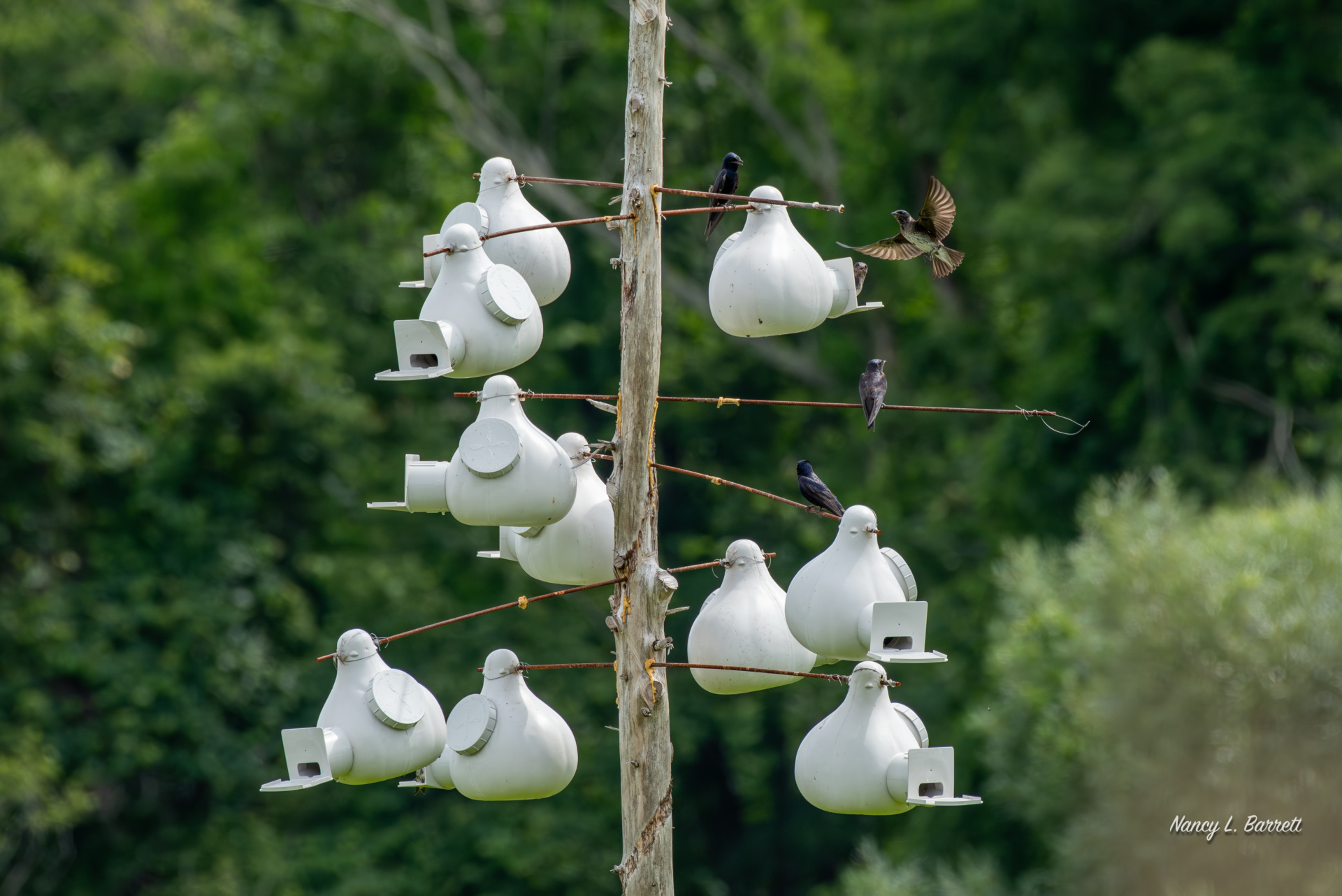
Purple Martins return to Connecticut to nest in April and May and leave for their wintering grounds in South America in August. They are cavity-nesters and live in colonies. In the eastern United States, they do not use natural cavities but depend on man-made housing to nest and rear their young. There are two types of Purple Martin housing. One is apartment-style bird houses with six or more compartments, each compartment having its own entrance. The other type is clusters of hollow gourds, natural or plastic, hanging from racks on poles, known as gourd trees.
In 2022, The Connecticut Audubon Society (CAS) Center at Pomfret erected housing for Purple Martins on its Bafflin Sanctuary. Open and grassy with Mashamoquet Brook nearby, the housing site offers desirable flood plain habitat and hunting grounds for birds which catch their insect prey on the wing. Ideal habitat for Purple Martins, they quickly established an active colony. Although initially both types of housing were provided, CAS staff found the martins preferred the gourds and more of them were added. In 2025, more than 80% of the gourds were in use.
Four years after housing was provided in Mashamoquet Meadow, the Center’s Purple Martin conservation initiative has provided gourd housing complexes in eight additional towns in northeastern Connecticut. The expanded effort has been funded by a generous donation from a CAS member. Complexes have been erected in Chaplin (Hubbard Sanctuary), Eastford (future preserve), Hampton (Little River Preserve and Trail Wood), Mansfield (Knowlton Hill Preserve), Plainfield (Quinebaug Valley State Fish Hatchery), Thompson (West Thompson Dam), Windham (Allanach-Wolf Woodlands), and Woodstock (Roseland Park). The complexes offer a total of 120 nesting cavities. Read more.