Kestrel population shows decline in CT as open fields vanish
By Correspondent
American kestrels have been arriving on the scene in recent weeks, making their familiar cry of “killy, killy killy.’’
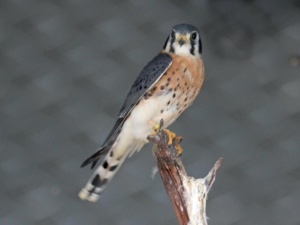
They are the smallest falcons – robin-sized, blue jay-sized – and sometimes missed or overlooked. But when you do see one, you can be dazzled by these fierce jewels that scan fields from fence posts or telephone wires, then swoop down on their prey or hover over it before nailing a meal.
“I feel that peregrine falcons get all the credit,’’ said Cathy Hagadorn, director of the Deer Pond Sanctuary in Sherman, owned by the Connecticut Audubon Society. “They’re like the gladiators.’’
Kestrels are different: Less glorious, more magical.
“I love them,’’ Hagadorn said.
But in a presentation given to the Litchfield Hills Audubon Society recently, naturalist Bethany Sheffer laid out a sobering story. Despite stalwart human efforts to house them, kestrel numbers are in sharp decline in the Northeast.
“There have been 2 million kestrels lost in the United States since 1970,’’ said Sheffer, a naturalist and volunteer coordinator at the Sharon Audubon Center, owned by Audubon Connecticut. “The population declines in the Northeast may by 90%.’’
Ryan MacLean, senior education coordinator at the Greenwich Audubon Center, also owned by Audubon Connecticut, has seen this decline in the annual hawk migration watch that it runs annually from August through November. In the 2023 watch, participants counted 614 kestrels. In 2024, the number was down to 369.
An analysis of kestrel numbers in the Greenwich count also showed a 5% decline from 2009 to 2019, MacLean said.
Yet kestrels are the most common, most widespread of all falcons. They are found across North America from the East Coast to Alaska and throughout much of South American outside the Amazon region.
They scour open fields for prey, eating rodents, insects, small birds and even snakes and amphibians. The males have striking plumage – cinnamon brown backs, slate-blue wings and caps, and distinctive facial markings. The females have brown wings, but the same strongly patterned face.
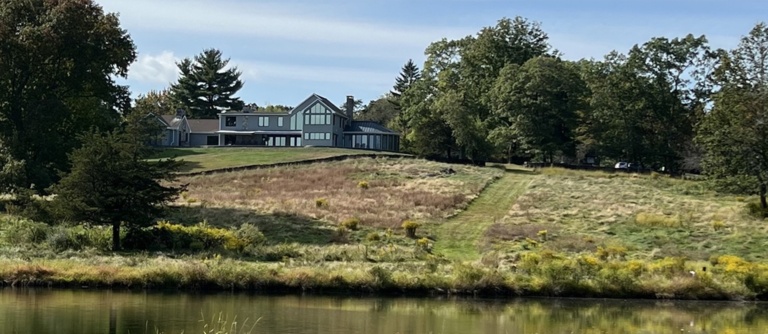
They flourished in Connecticut in the 19th century when the state’s land was mostly fields and pastures, giving kestrels the open space they need to thrive.
But those days are long gone. Farm fields have largely gone back to woods or grown houses. Kestrels also don’t construct nests – they make their homes in crevices of old trees or in woodpecker nesting holes. When residents cut down old trees bordering their land, they deprive kestrels of places to live.
To counter this, there’s been a sustained effort in the state to erect and maintain kestrel houses and monitor the birds that nest in them. The state Department of Energy and Environmental Protection has specific plans for kestrel box construction at its fact sheet on kestrels.
These houses have to be put up near at least an acre of open fields with other similar fields nearby, said Sheffer, the naturalist. They also have to be 10 to 30 feet off the ground, which means getting a ladder out to clean the boxes every spring.
The Sharon Audubon Center has been a leader in studying kestrels in Connecticut, with its staff now monitoring 13 kestrel boxes on private land in Litchfield County, Sheffer said.
It’s through efforts like this throughout the state that kestrels are surviving in the state, but they still face a slew of challenges.
Starlings steal their nesting sites. Cooper’s hawks – which feed on small birds – make no exception to kestrels. Developers see open fields as housing lots, not falcon habitat. West Nile virus is an every-year threat. Climate change means a changing ecosystem. And there is the issue of neonicotinoids – this generation’s DDT.
These systemic insecticides make plants toxic to a host of insects, including pollinating insects vital to the state’s plants. They may also be robbing insect-feeding birds, including kestrels, of a major source of food and the grasshoppers young kestrels need as they learn to hunt.
There is a bill before the General Assembly to ban most uses of neonicotinoids in the state. New York passed a similar bill last year.
The Sharon Audubon Center is asking residents to take a Kestrel Pledge: put up kestrel boxes if possible; leave old trees and snags standing; eliminate standing water where West Nile-carrying mosquitos can breed; and publicly take a stand against neonicotinoids.
Sheffer is forthright on the need for a neonic ban. “It’s speeding extinction of a bird of prey,’’ she said.