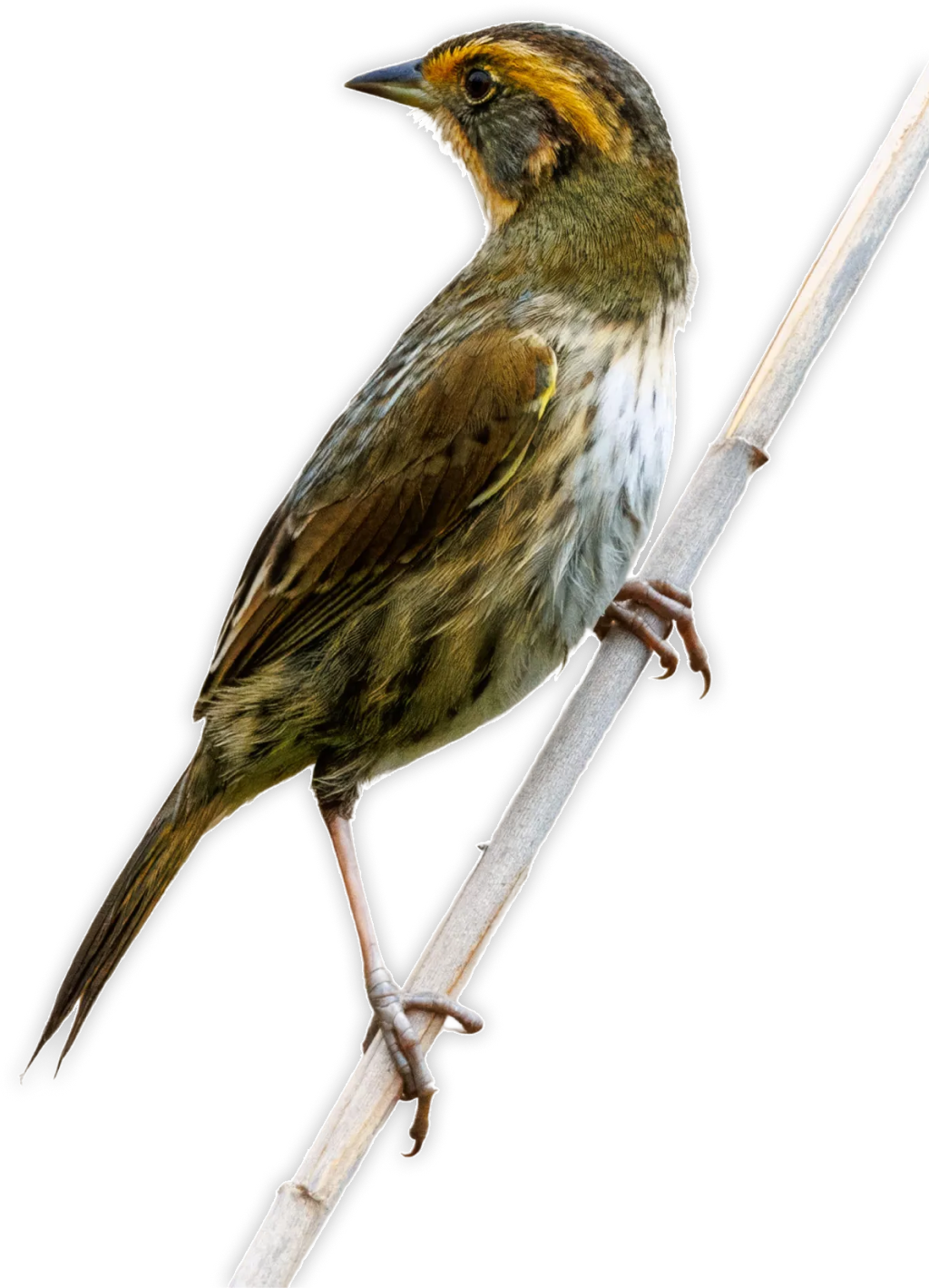
Pagoda Dogwood — A Year-Round Gift for Gardeners and Birds
 As the summer landscape’s palette of greens morphs into its autumn hues, individual plants may stand out to us more than before. Pagoda dogwood (Swida or Cornus alternifolia*), for instance, may seem to suddenly emerge from the crowd, dressed to impress in hoop skirts the color of chianti.
This small native tree is named for its unusual structure, with tiers of horizontally spreading branches said to resemble pagoda rooflines. Yet its fall foliage and graceful branching pattern are just two of its many desirable features. Spring flowers, blue fruit, and stems of green, lavender, or burgundy also contribute to the aesthetic appeal of pagoda dogwood. And its size, typically 15 to 25 feet tall and wide, makes this tree suitable for many residential landscapes.
But pagoda dogwood is also ecologically valuable. Dogwoods are host to 121 species of lepidoptera, including the Spring Azure butterfly and Cecropia moth. They attract many native pollinators and feed songbirds and other animals. Pagoda dogwood is also used for nesting and cover by many birds, including the American Robin, Cedar Waxwing, Red-eyed Vireo, Scarlet Tanager, and Purple Finch.
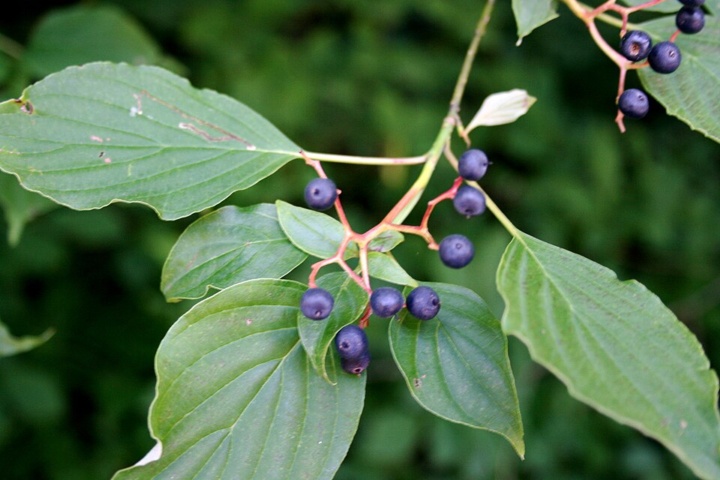
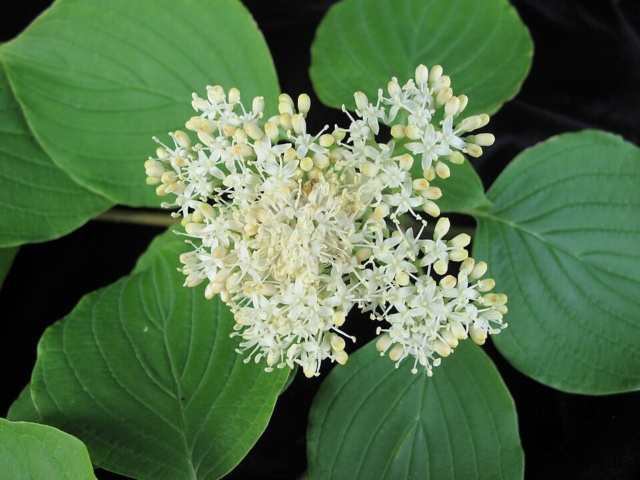
Clusters of creamy-white, fragrant flowers appear from May to early June. Known as cymes, these clusters measure 2 to 3.5 inches across and attract butterflies and other native pollinators. Small green fruits, called drupes, follow the flowers, turning pink and then dark blue by July. The fruit is especially striking in contrast to the bright-red stalks that hold it.
Pagoda dogwood was once called pigeonberry because the now-extinct Passenger Pigeon favored its fruit. Today, at least 40 other bird species, including finches, flickers, tanagers, thrushes, vireos, and woodpeckers enjoy its drupes. High in fat, these fruits are valuable to migrating birds.
Another unusual characteristic of this tree is its alternate leaf pattern, which gives rise to another common name: alternate-leaved dogwood, and its scientific species name, alternifolia. Other North American dogwood species have opposite leaves, as when two leaves grow directly opposite one another on the stem.
Native from Newfoundland south to Florida and west to Nebraska, pagoda dogwood can be found in moist and dry forests, woodland edges, and riparian corridors. Sometimes it grows as a large multistem shrub.
Pagoda dogwood is very shade tolerant. Partial shade is ideal, but it can be grown in full sun with adequate moisture. The soil should be well drained but consistently moist, acidic, and rich in organic matter. Choose its location carefully, for the shallow, fibrous roots of pagoda dogwood make transplanting difficult. Woodland perennials planted around its base will help keep the tree’s roots cool and moist.
 Growing herbaceous plants in generously sized beds beneath native trees is an excellent gardening practice. It benefits insects that spend the summer in tree canopies before dropping to the ground in fall to overwinter in leaf litter.
Plant pagoda dogwood as a specimen tree, in a shrub border, or at the woodland edge. Consider creating a woodland garden that includes one or more shade trees, such as sweet birch or maple, with a pagoda dogwood or two. Include some shade-tolerant, low shrubs, such as northern bush honeysuckle, mapleleaf viburnum, and snowberry, along with herbaceous plants such as ferns, woodland phlox, Virginia bluebells, wild geranium, zigzag goldenrod, and wood asters.
This graceful native understory tree will reward gardeners throughout the year not only with its beauty, but also with the many birds and other wildlife that it nourishes and protects.
*For many years, pagoda dogwood was included in the genus Cornus, along with all of the other plants with dogwood in their names. But recent taxonomic changes resulted in this plant being placed in the genus Swida. The flowering dogwood, formerly Cornus florida, is now called Benthamidia florida. Most nurseries and other resources still acknowledge the old genus name Cornus for all dogwoods. See the Penn State Extension article listed below for more information.
Each month, Homegrown Habitat features a native plant that supports birds and beneficial insects and is suitable for residential gardens. This column is written by Sarah W. Middeleer, a landscape designer and member of the Connecticut Audubon Society’s Board of Directors.
Do you have favorite native plants in your garden or questions about native plant gardening? Email homegrown@ctaudubon.org with questions or observations.
Resources
Books:
William Cullina, Native Trees, Shrubs, and Vines A Guide to Using, Growing, and Propagating North American Woody Plants, Houghton Mifflin Company, 2002
Uli Lorimer and the Native Plant Trust, The Northeast Native Plant Primer 235 Plants for an Earth-Friendly Garden, Timber Press, 2022
Heather McCargo and Ana Fialkoff, Native Trees for Northeast Landscapes, Wild Seed Project, 2021
Websites:
Biota of North America Program (BONAP)
Edge of the Woods Native Plant Nursery
Missouri Botanical Garden Plant Finder
North Carolina Extension Gardener Plant Toolbox