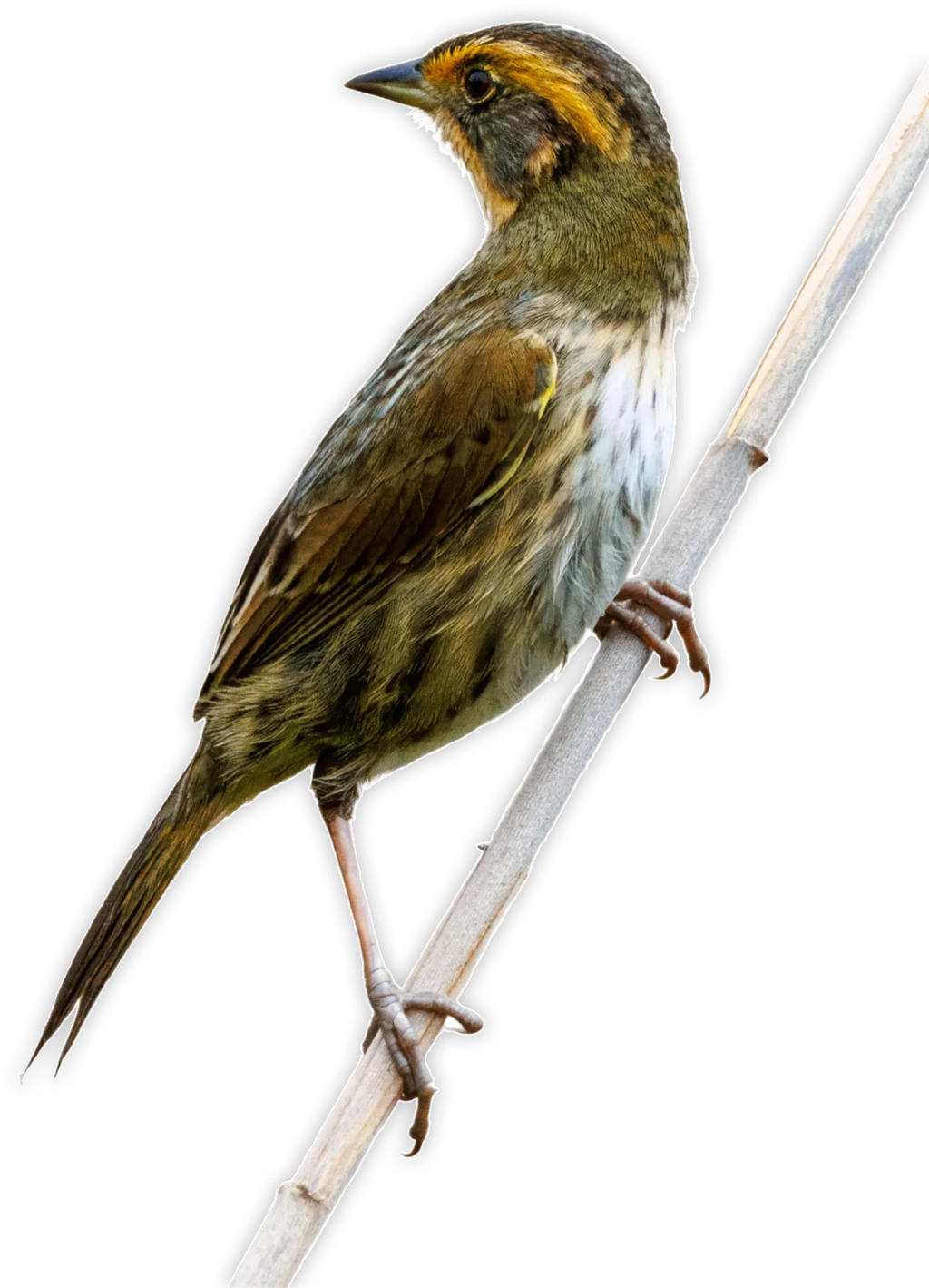
Honda and Sierra Club Help Connecticut Audubon Restore Stratford Point
STRATFORD, CT — The Connecticut Audubon Society restored about 1.5 acres of habitat at its Stratford Point sanctuary this week, thanks to a $75,000 grant from Honda and hands-on help from Sierra Club volunteers who traveled from across the country.
More than a dozen Sierra Club volunteers spent four days removing invasive plants, clearing pathways, thinning crowded trees, and making room for native vegetation to thrive at the 28-acre coastal sanctuary overlooking Long Island Sound. They transformed an area saturated by dense, impenetrable invasives into a clearing where natives can better thrive.
“In habitat management, you rarely see results this quickly,” said Stefan Martin, Connecticut Audubon’s Conservation Manager, who led the restoration efforts. “Seeing such a dramatic transformation in a short time is incredibly rewarding and gives us great hope for the future of this habitat.”
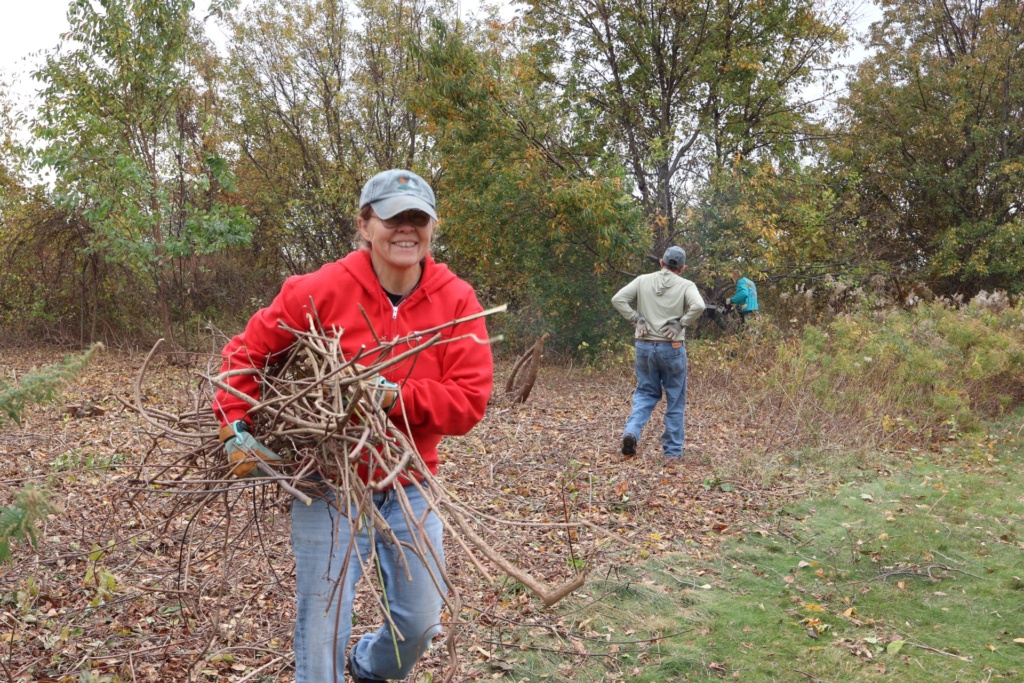
Cindy Fink, a Sierra Club member from New Jersey, helps restore Stratford Point in November 2026. Photo by Melissa Chan
The project marked the Sierra Club’s first service trip to Connecticut. Volunteers with the nation’s largest grassroots environmental organization traveled from as far as Seattle, Texas, Illinois, Florida, and Tennessee, as well as New Hampshire, New York, and New Jersey.
“What we’ve found is that there are a lot of people out there who still have the energy, are committed to the environment, and love learning,” said Sallie Schramm, the Sierra Club’s National Outings Leader, as she clutched a fistful of invasive vines.
Working several hours each day in early November, the volunteers targeted invasive species including Asiatic Bittersweet, Japanese Honeysuckle, and Black Swallow-wort, a climbing vine that poses a particular threat to Monarch butterflies. Removing these aggressive plants increases habitat diversity and creates more space for native species such as Northern Bayberry, which provides valuable food and habitat for birds.
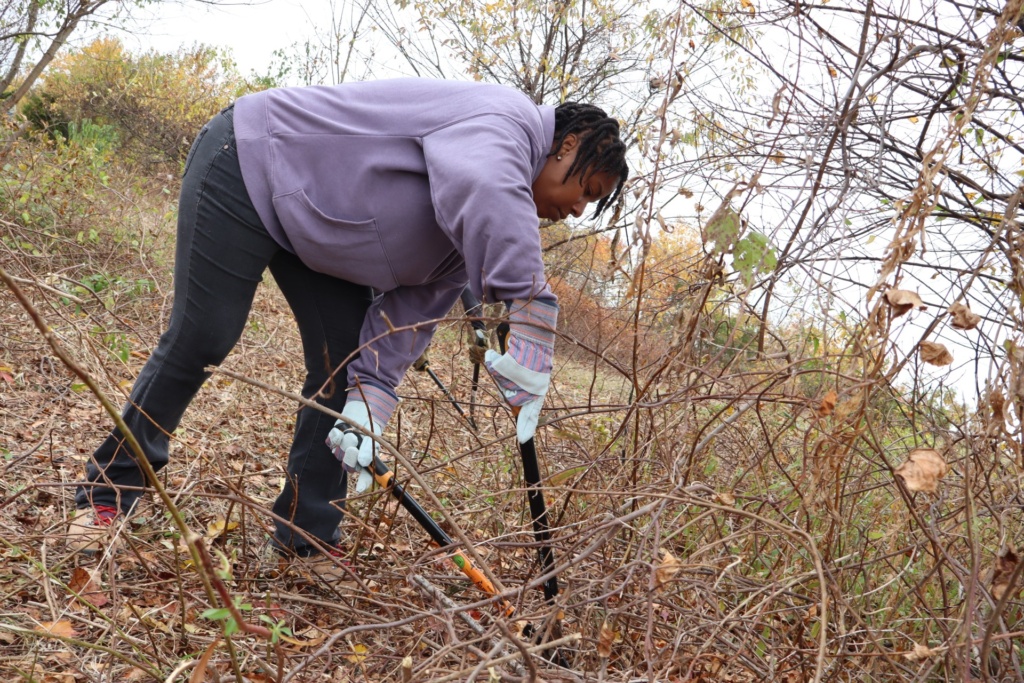
Tamika Owens, a Sierra Club member from Tennessee, helps clear a pathway at Stratford Point. Photo by Melissa Chan
“We’re selectively removing trees and brush to reset the area to early successional,” Martin said. “It’s like an old pasture starting to transition into shrubland, a habitat type that is hard to come by in the state these days. It’s like stepping back in time to the turn of the century.”
Each morning began with an hour-long educational presentation led by Conservation Manager Stefan Martin and other members of Connecticut Audubon’s conservation team. Volunteers then headed into the field, pulling tangled vines, hauling away branches, and cutting back overgrown vegetation in designated areas.
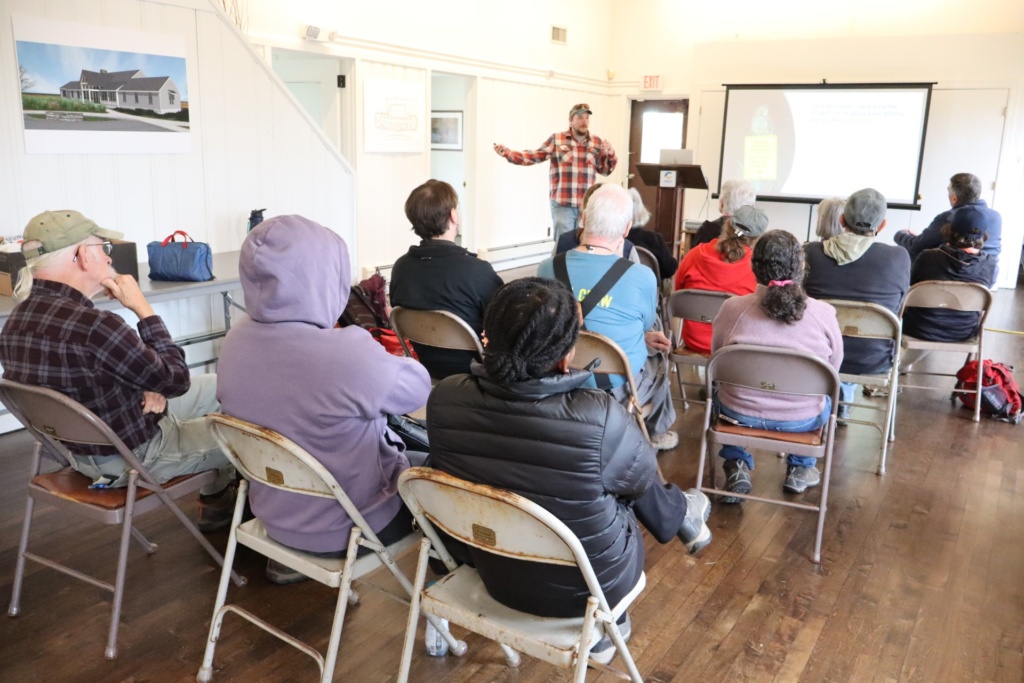
Stefan Martin leads an educational presentation at Stratford Point in November 2026. Photo by Melissa Chan
For Ann Lehrer, 83, who traveled from Fort Worth, Texas, the work was about more than clearing invasive plants.
“I have a sign on my door back in my apartment that says, ‘There is no Planet B.’ We have to be good stewards of this planet and undo much of the damage done,” she said.
Stratford Point, Connecticut Audubon’s newest sanctuary, occupies a 28-acre peninsula where the Housatonic River estuary meets Long Island Sound. Surrounded by waters rich in fish, marine life, and extensive oyster beds, the sanctuary provides important habitat for migratory and resident birds.
On Sept. 27, Stratford Point reached a remarkable milestone, becoming one of only five sites in Connecticut to have recorded more than 300 bird species.
The restoration project will help protect and enhance this ecologically important coastal landscape while maintaining publicly accessible greenspace for visitors to enjoy. It would not be possible without funding from Honda, which went toward hiring landscape contractors to help restore the entire sanctuary.
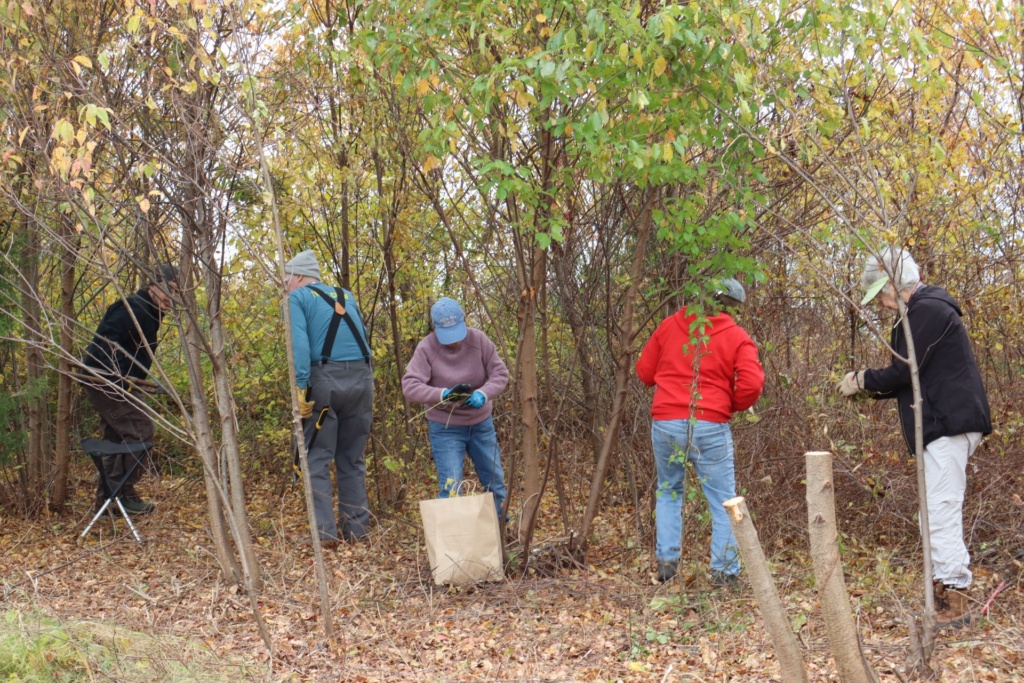
Sierra Club members came from around the country to help restore Stratford Point. Photo by Melissa Chan
Founded in 1898, the Connecticut Audubon Society protects Connecticut’s birds, other wildlife, and their habitats through conservation, education, and advocacy. Connecticut Audubon operates nature facilities in Fairfield, Milford, Pomfret, Hampton, Sherman, and Old Lyme, a program that focuses on education in the greater Hartford area, and an EcoTravel office in Essex. It manages 22 wildlife sanctuaries, encompassing more than 3,400 acres of open space, and educates over 100,000 children and adults annually.
###
Media Contact:
Melissa Chan
mchan@ctaudubon.org
203-259-0416 ext. 408