Are Sandhill Cranes Nesting in Connecticut?
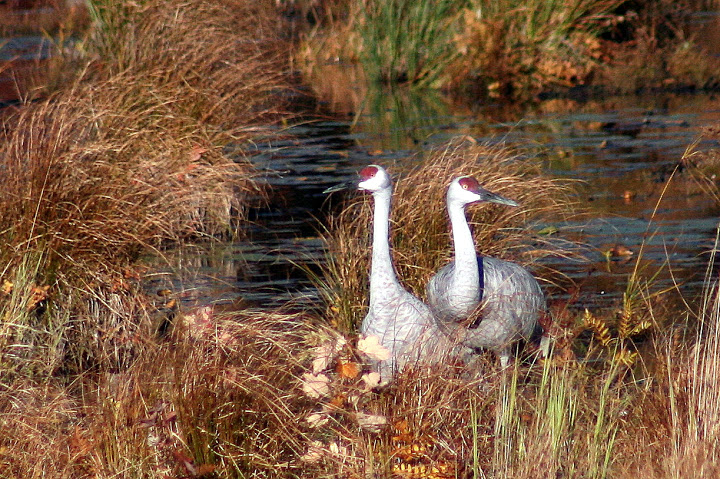
Photo by Denise Savageau
August 2, 2016
Sandhill Crane
Grus canadensis
by Tom Andersen
Communications Director
August 2, 2016 – Are Sandhill Cranes nesting in northwestern Connecticut? If they are, it would be the first documented nesting for the species in the state. They are definitely nesting in nearby Massachusetts. But nobody has been able to confirm it for Connecticut – yet.
A fellow who lives in Litchfield County sent me a couple of photos of Sandhill Cranes that he took last week in Norfolk, and when I posted them on our Facebook page with that question the interest it drew was startling — 2,000 likes, shares, and comments, more than for just about anything we’ve ever posted and enough to make us think our Bird Finder fans would want to know more.
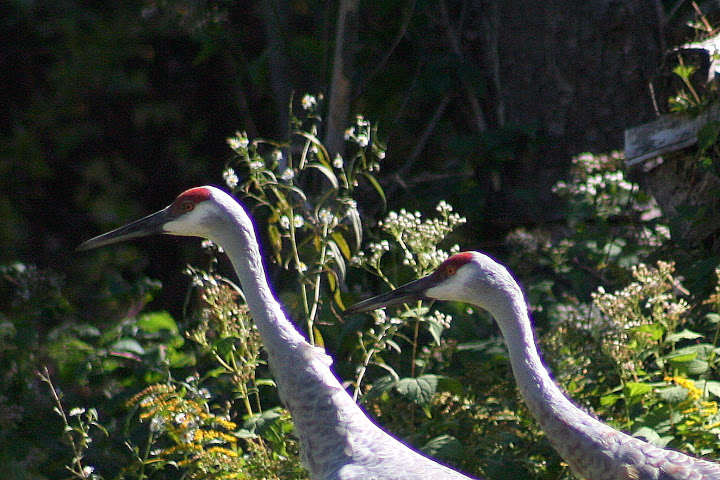
Photo by Denise Savageau
People associated with Aton Forest are hopeful that the cranes are nesting up there but nobody has been able to confirm it. Yet they definitely are nesting nearby.Field work conducted during the second Massachusetts breeding bird atlas project, from 2007-2011, confirmed that they were nesting across the border, in New Marlborough. When young cranes mature, after about four years, they disperse to find their own breeding territory. So Aton Forest and other nearby areas with suitable habitat would be likely locations for them to expand into.
2016 was the third year in a row that Sandhills have been seen at Aton but no recently fledged birds have been seen. Intriguingly, a woman who lives in that area called Aton Forest several years ago to say she had Sandhill Cranes breeding in her field but she wouldn’t give her name or address.
Photos by Denise Savageau.