Blue-headed Vireo
Vireo solitarius
by Greg Hanisek, editor of Connecticut Birds
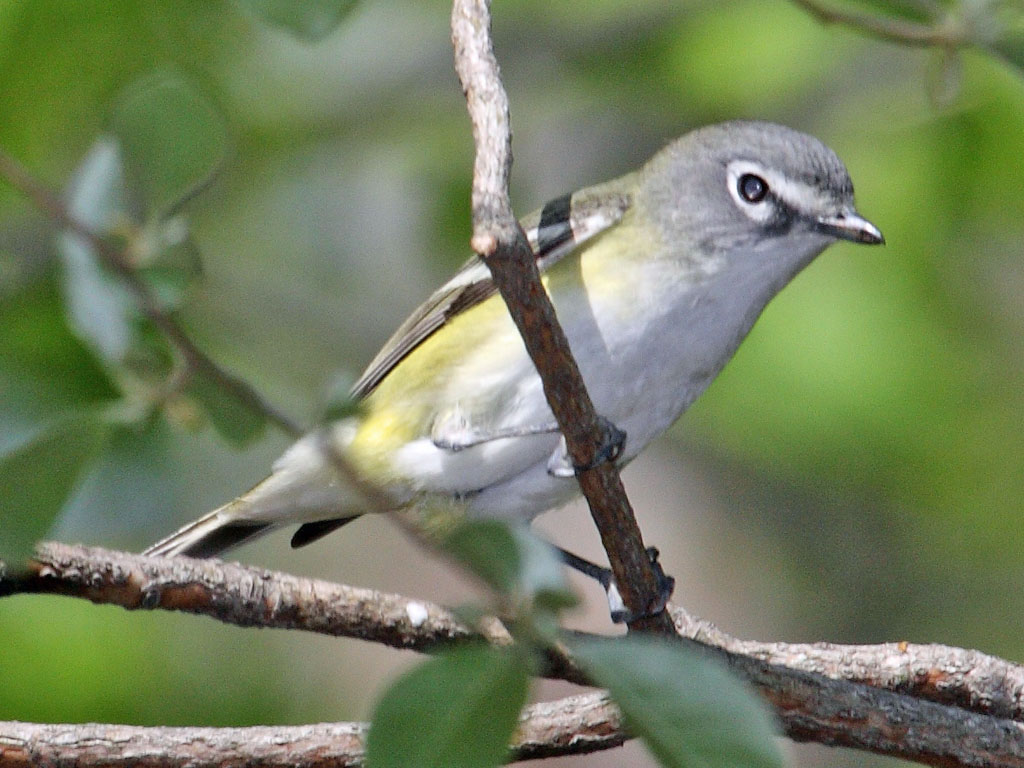
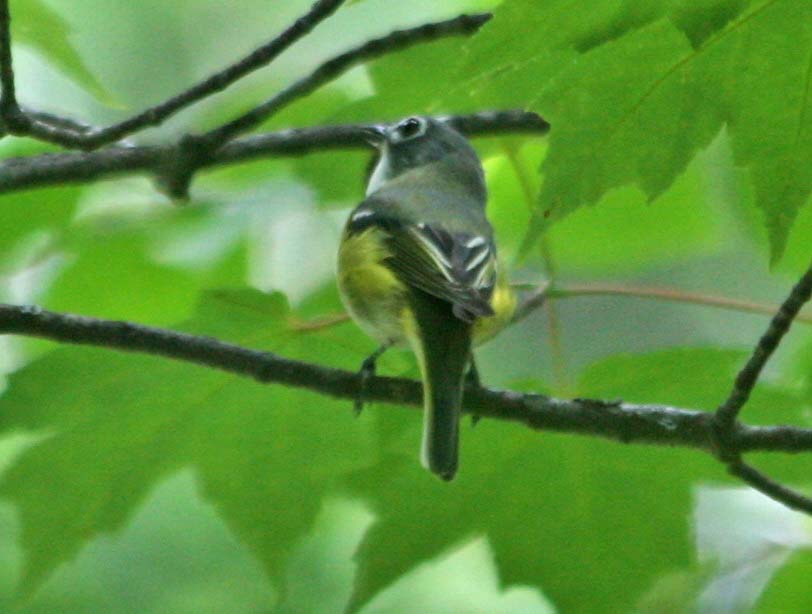
What It Looks Like: This is a handsome small songbird with a very distinctive pattern. Dark above and white below, it has a bold white eye ring on its blue-gray head and shows a pair of bold white wing bars. A greenish back and yellow flanks complete its noteworthy appearance.
Where To Find It: During migration, the Blue-headed Vireo can be found in trees of any kind – deciduous or coniferous. It’s a classic October migrant, reaching its southbound peak in Connecticut after other vireos have passed their peak numbers.
Some continue to move into November, and occasionally a few make it into December. It’s a fairly common spring migrant, mainly from mid-April to early May, and it breeds rather sparsely.
Nesters favor the northern tier, but they can breed anywhere that supports their favored habitat – well-shaded stands of Eastern Hemlock.
Its deliberate movements will make it easier to focus on than the flitting warblers. In spring and summer, knowing its song will greatly enhance your chances of finding it. It sings a series of phrases, a typical pattern for several vireos including the very common Red-eyed Vireo. Compared to the Red-eyed, the song of the Blue-headed is generally slower and sweeter, but they’re similar enough that there’s always room for uncertainty.
Noteworthy: It was once considered a wide-ranging and variable species known as the Solitary Vireo but was subsequently spit into three species, with the Blue-headed Vireo the only one native to eastern North America. The other two are the gray-backed Plumbeous Vireo of the Rocky Mountains and the Cassin’s Vireo of the far West. The Cassin’s and Solitary are similar enough that some individuals aren’t safely separated in the field.
Conservation Status: Least Concern
Photos by Dominic Sherony, top, and Dick Daniels, carolinabirds.org