Priorities in Hartford: Protection for horseshoe crabs, funding for wildlife
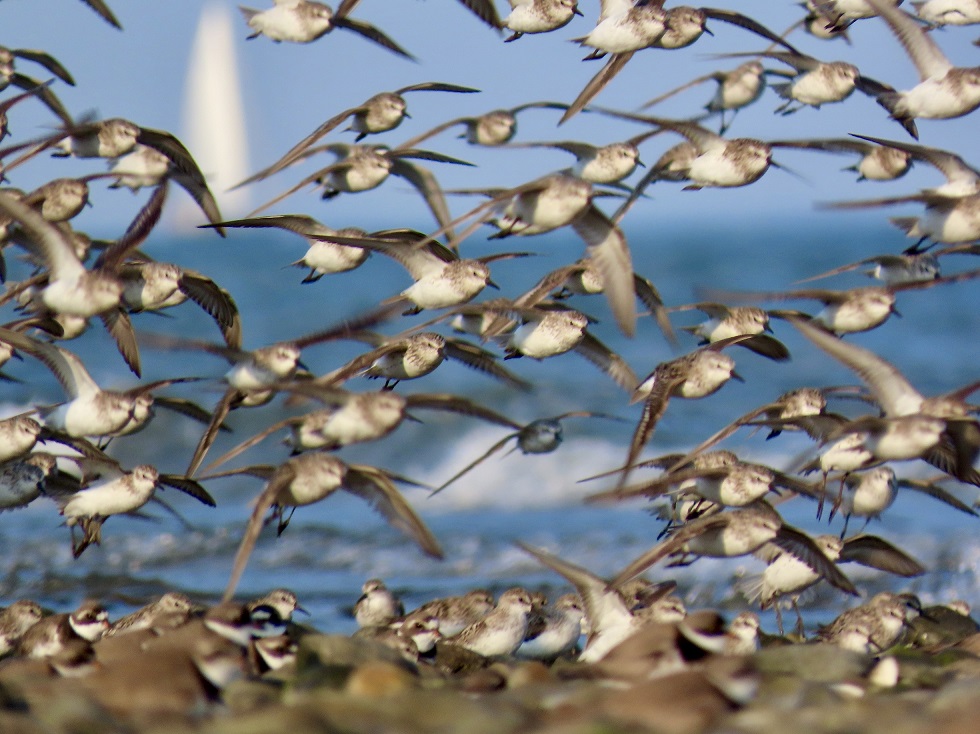
Flocks of 10,000 or more small shorebirds called Semipalmated Sandpipers were common until recent years at our Milford Point Coastal Center. Photo by Patrick Comins.
Two bills that would make important improvements to conservation in Connecticut are being considered in Hartford by the General Assembly’s Environment Committee. One would close a loophole in 2023 law that banned the harvest of horseshoe crabs in Connecticut; the other would create a work group to find sources of funding to protect non-game wildlife in the state.
Connecticut Audubon supports these bills and has examined the reasons both are important in recent Connecticut State of the Birds reports.
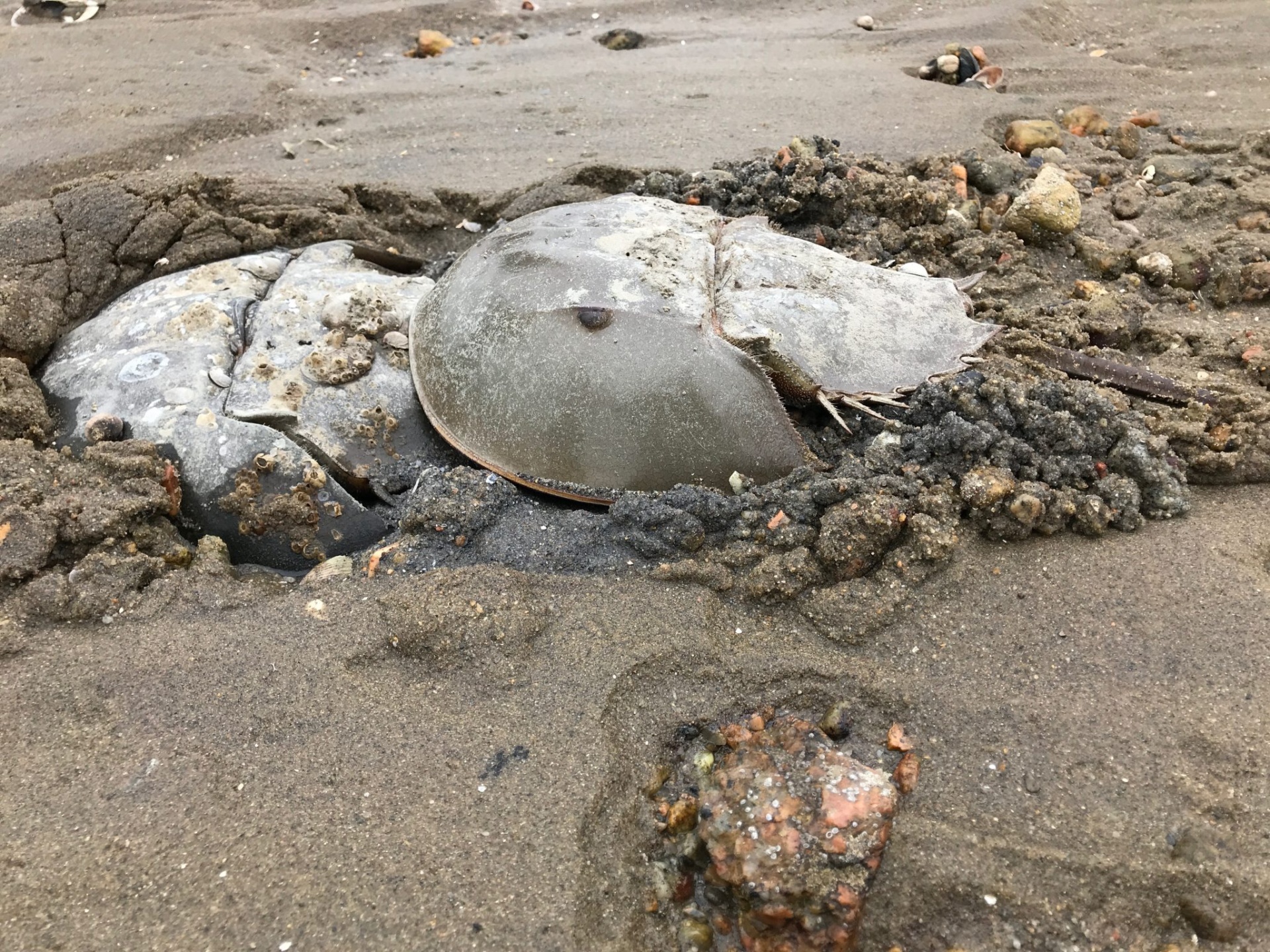
H.B. No. 5333, An Act Concerning the Regulation of Fisheries in the State, prohibits the use of horseshoe crabs as bait, even if the horseshoe crabs are caught in another state.
Here in italics is in excerpt from testimony submitted by Connecticut Audubon Executive Director Joyce Leiz:
Horseshoe crabs and migratory shorebirds are tightly interdependent. During their spring migration from South America to the far north, shorebirds rely on a massive influx of energy to survive. Protein-rich horseshoe crab eggs provide that fuel.
Flocks of 10,000 or more small shorebirds called Semipalmated Sandpipers were common until recent years at our Milford Point Coastal Center, where they rested and fed for the next leg of their journey. The North American population of Semipalmated Sandpipers has plummeted by 80 percent—meaning four out of every five of these birds have disappeared in recent decades. Recovery requires an abundant supply of horseshoe crab eggs so these and other shorebirds can gain the weight and energy they need to complete their migration and successfully breed. …
We have addressed the horseshoe crab problem in our Connecticut State of the Birds reports, especially in the 2021 report, titled, “Three Billion Birds Are Gone. How Do We Bring Them Back?” As a member of the multi-state Horseshoe Crab Recovery Coalition, we have worked for a ban on the use of horseshoe crabs for bait and for the development of synthetic alternatives to the use of horseshoe crab blood in medical procedures.
However … we encourage the committee to consider allowing the use of horseshoe crabs as bait if the crabs are certified to be from regions where scientifically based harvest regulations are being enforced until an alternate bait option is identified. The only area we know of where this is the case is Delaware Bay. There, years of careful science and regulation have allowed horseshoe crab populations to begin to recover.
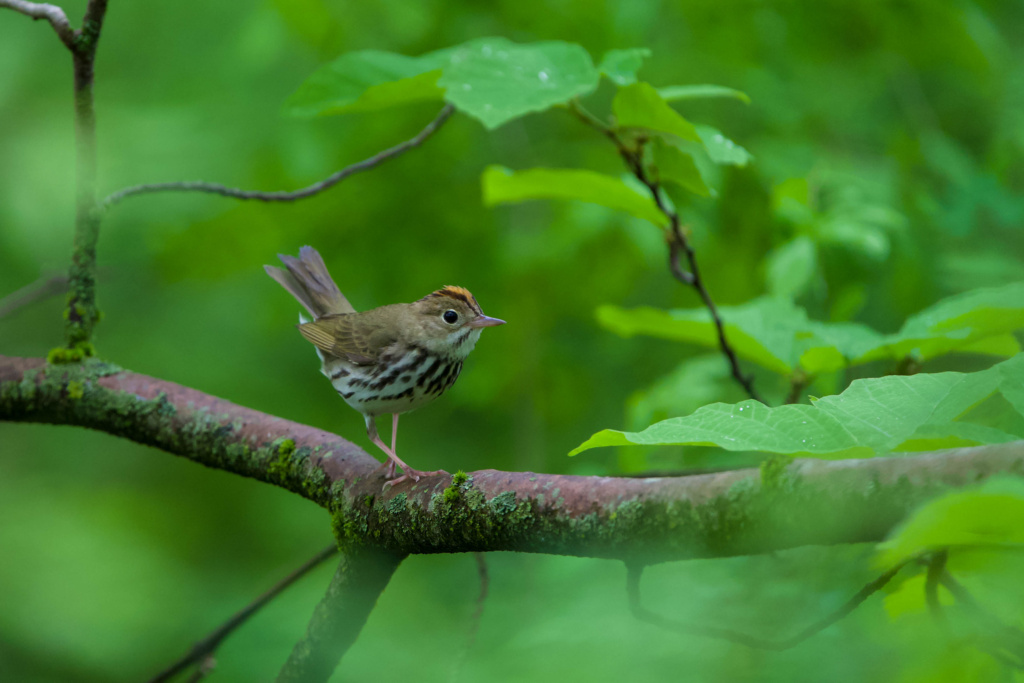
A bill in Hartford would set up a working group to look for ways to fund the conservation of non-game species. Ovenbird photo by Kelly Siranko.
We support H.B. 5330, An Act Establishing a Work Group to Identify Sustainable Funding for the Conservation of Nonharvested Wildlife, because Connecticut’s conservation efforts could be greatly improved by funding that doesn’t depend on revenues from hunting licenses — the source of much wildlife funding now. This bill is an important step toward creating a reliable financial foundation for the species that make up most of the state’s biodiversity.
Here in italics is in excerpt from testimony submitted by Connecticut Audubon Executive Director Joyce Leiz:
We have argued several times in our recent Connecticut State of the Birds reports that the most cost-effective strategy is to protect wildlife populations so they do not become endangered or threatened, at which point conservation costs skyrocket.
H.B. 5330 would allow the state to identify funding for proactive management, preventing birds and other wildlife from reaching the point where they require the strict and costly protections of the Endangered Species Act.
We strongly support the recommendation to include expertise in fisheries and aquatic life within the work group. Ensuring that salt water, brackish and fresh water species are included is essential for a complete approach to Connecticut.