Roseate Spoonbill
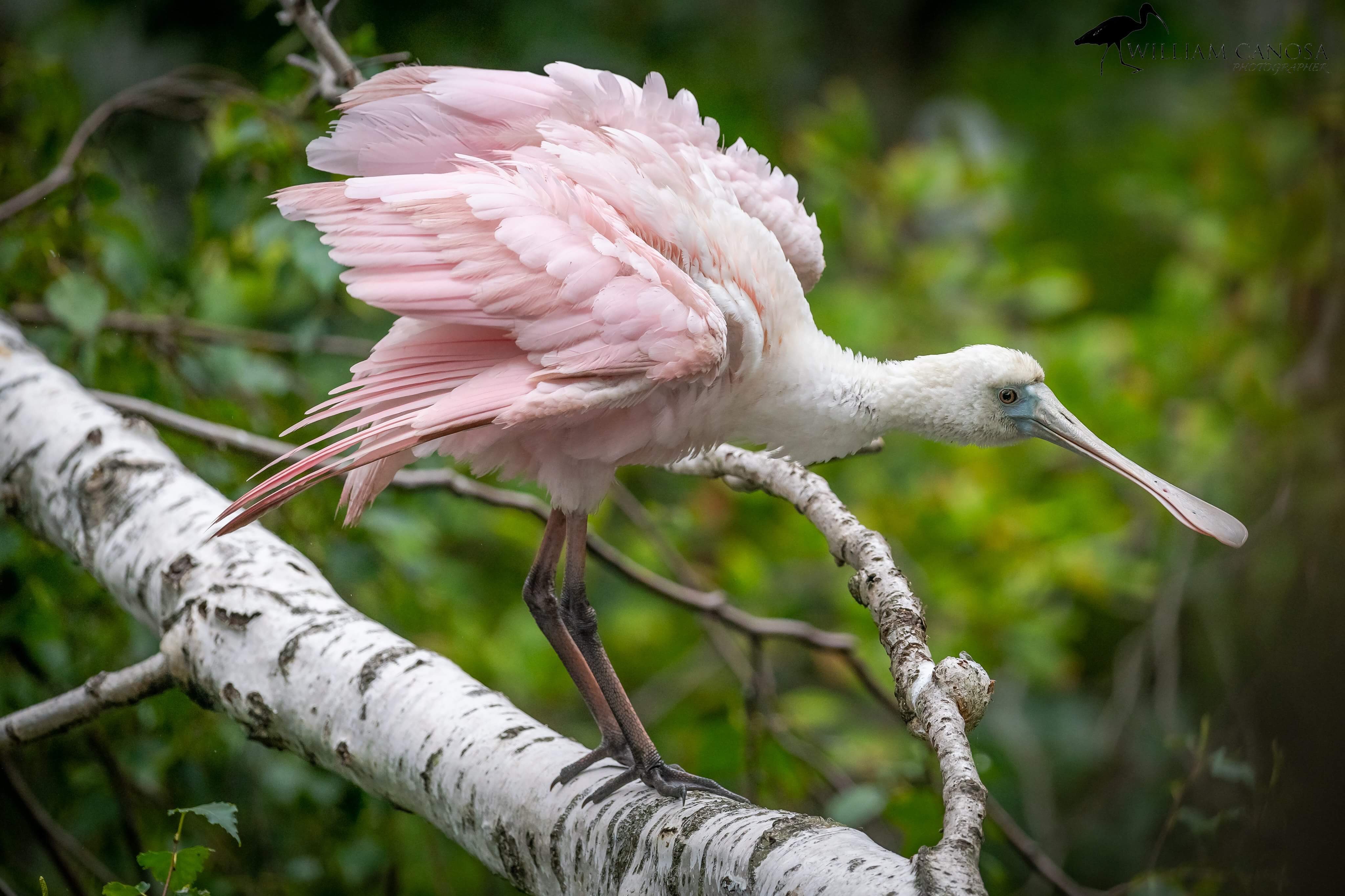
The Roseate Spoonbill spent much of Sunday, September 23, 2018, in Stratford, thrilling a gaggle of birders. Photo courtesy of William Canosa.
Roseate Spoonbill
Platalea ajaja
by Genevieve Nuttall
Roseate Spoonbills can be found in marshy habitats from South America, along the coast of Central America, up into the southern United States. In places like the Everglades, Roseate Spoonbills are easily seen and even breed there during the winter months. These birds nest in colonies, often with other long-legged waders, in trees along the edge of marshes.
Although common locally in places like the Everglades, it is difficult to find this species in other areas. Individuals will occasionally travel up the Atlantic Coast as far as southern New Jersey, but seeing a Spoonbill in Connecticut and Maine (where it was recorded as a state record in 2018) was unheard of.
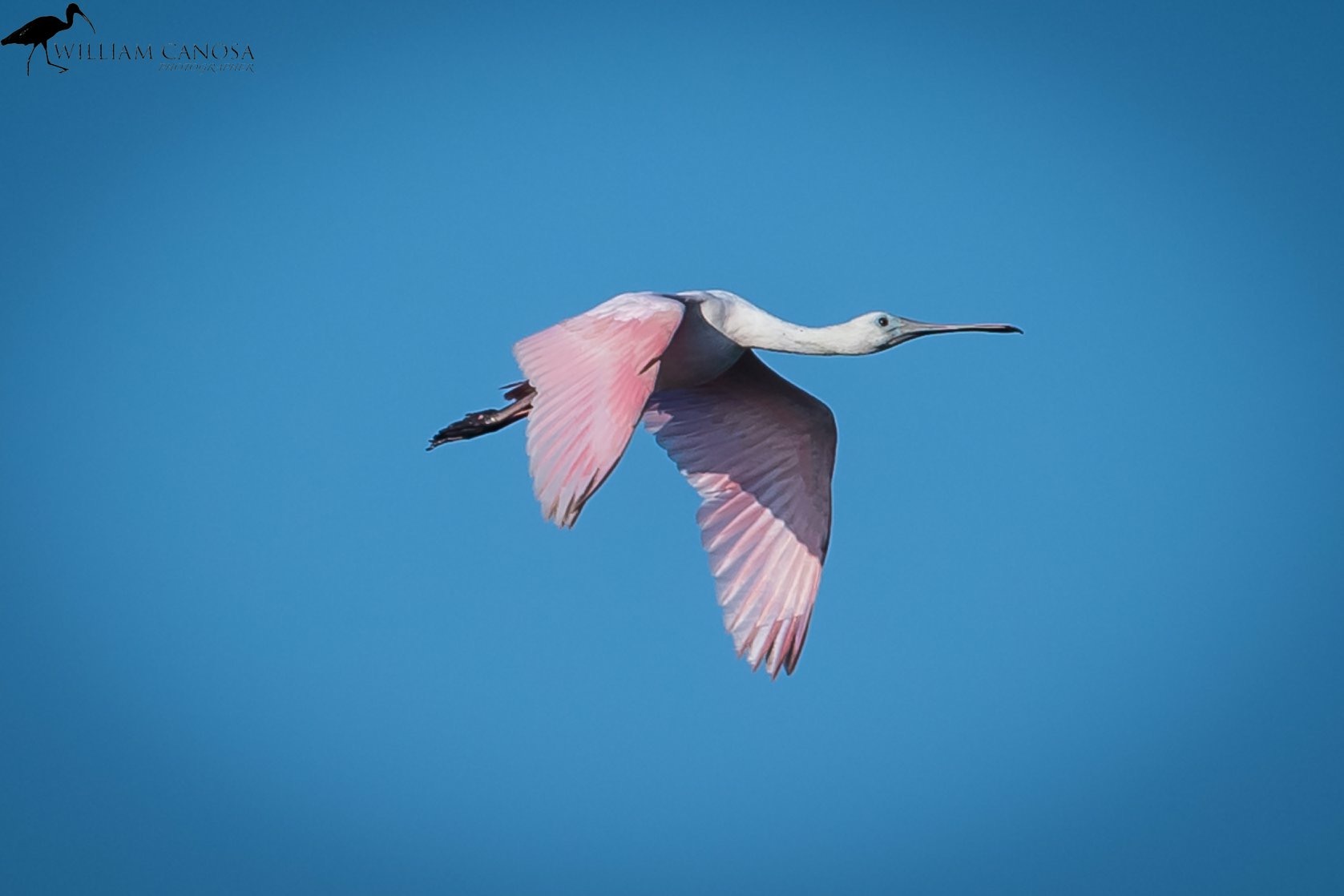
Roseate Spoonbill, taken Wednesday, September 19, 2018, by William Canosa.
The National Audubon Climate Report lists these birds as climate threatened but shows that they may be able to shift their range north. If so, this may be the first of many state records for this species!
Like flamingos, Roseate Spoonbills get their pink coloration from the foods they eat. Pigments in the shrimp and other crustaceans that Spoonbills eat transfer to the feathers. To capture food, they sway their heads in shallow water and use their spoonlike bill to feel around for prey.
Its unique bill makes it difficult to confuse the Roseate Spoonbill with any other species. There are other Spoonbill species in the world but none in North America. The bill is long and curved at the tip like a spoon. Most of their body is a roseate, or pink, color, with the shoulder feathers having a darker hue. You may notice that their heads are bald and tinted yellow. If you ever come upon a breeding colony in the southern states, you will also hear the distinct grunting calls that are exchanged among adults during the nesting season.
While the Roseate Spoonbill may look unappealing at first glance, it is a truly beautiful and unique bird. Unfortunately their beauty was noticed by feather collectors in the 1800s, when many colonies of waders were destroyed by humans for plume collection. Their populations have come back since this decline, but they are still subject to human disturbance in nesting colonies, habitat degradation, and climate change.
Genevieve Nuttall is the former Osprey Nation Coordinator for the Connecticut Audubon Society.