Pine Warbler
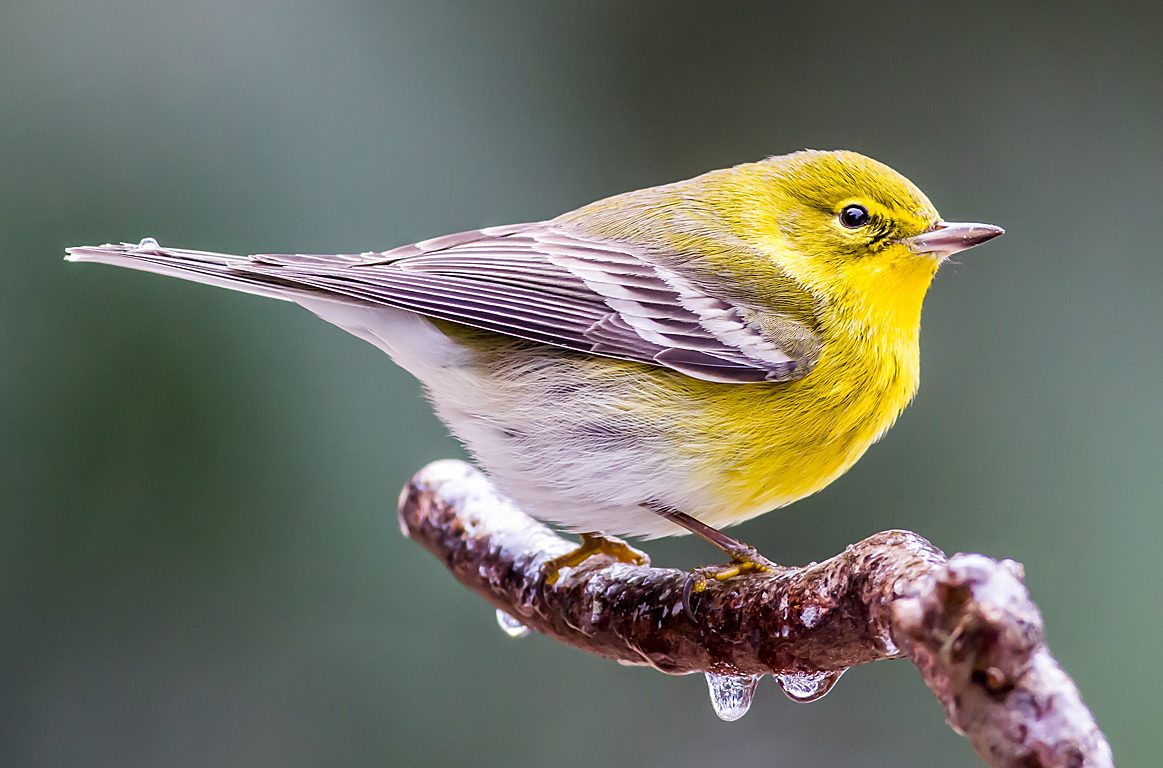
Pine Warbler photo by Patrick J. Lynch.
Pine Warbler
Setophaga pinus
What a Pine Warbler looks like
Pine Warblers can range from bright yellow and green to dull brownish-gray depending on their age, sex, and the time of year. In early spring, males are a vibrant yellow from throat to belly, with some streaking along the breast.
They sport olive green backs, two prominent white wing bars, white underparts, and noticeable white tail spots. Even at their dullest, Pine Warblers always have unstreaked backs and visible wing bars.
Pine Warblers are also larger and heavier-billed than most warblers, and their movements are deliberate rather than flitty. They often creep along branches, probing clumps of pine needles for food.
The Pine Warbler sings a trilled song, but two other common species, the Chipping Sparrow and Dark-eyed Junco, also have trills and both are also singing at this time of year. Remember, the Pine Warbler’s trill is short, sweet, and musical compared to the Chipping Sparrow’s. Juncos sing a looser, more erratic trill; and they’ll be leaving Connecticut for more northerly breeding areas soon.
Where to Find Pine Warblers
As their name suggests, Pine Warblers are closely associated with pine trees, particularly eastern white pines in Connecticut. Search parks, land preserves, or anywhere with stands of pines to find them. Wintering birds may visit suet feeders.
Interesting Fact
Unlike most wood-warblers, Pine Warblers have breeding and wintering ranges that lie almost entirely within the United States and Canada. This hardy warbler winters primarily in the Southeastern US, with a few overwintering in southern New England.
Conservation Status
Pine Warblers are listed as a species of least concern by the IUCN.