Baird’s Sandpiper
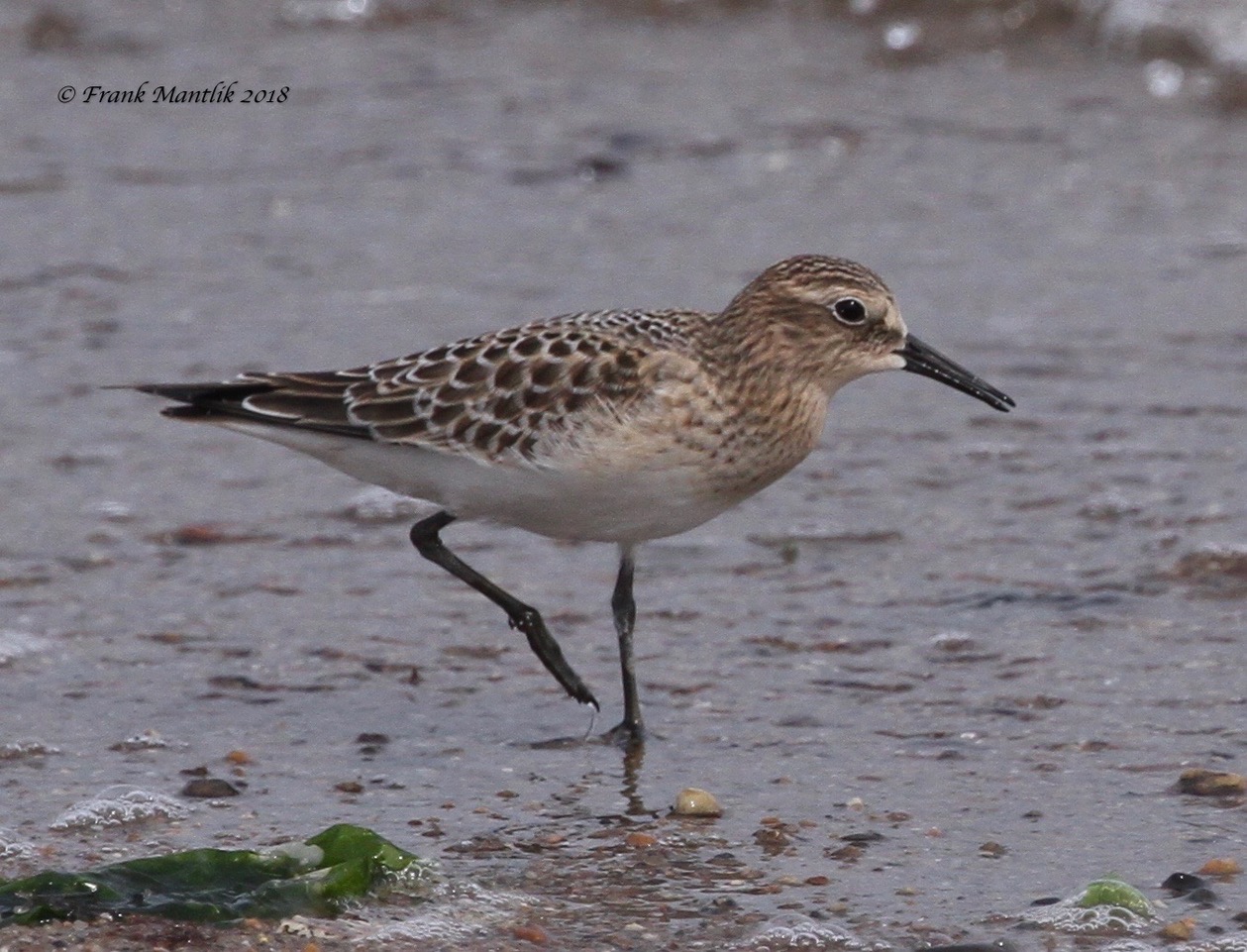
Baird’s Sandpiper in fall plumage. Photo by Frank Mantlik.
Baird’s Sandpiper
Calidris bairdii
by Frank Gallo
Baird’s Sandpipers breed in alpine tundra and dry coastal areas of the high Arctic, and are a long-distance Central Flyway migrant to and from South America.
Birds stray east to Connecticut mainly in autumn and are generally found on mudflats and grassy estuary, pond, and marsh edges, often in drier areas than those preferred by similar species.
Milford Point, Sandy Point in West Haven and Hammonasset Beach State Park in Madison are all good places to look.
Baird’s Sandpiper is a long-winged, medium-sized “peep” slightly larger than a Semipalmated Sandpiper. It is similar in size and shape to the White-rumped Sandpiper. Both have wingtips that extend beyond the tail and often cross above it; Baird’s are warm brown in color, dark-rumped, and often look hooded due to fine brown streaks on their head and breast. White-rumps are gray-toned, have arrowhead-shaped streaks down the flanks, and a more patterned face.
Both have medium-sized slightly drooping bills. Baird’s has a completely dark bill and White-rumped shows a bit of red at the base of the lower mandible that is visible at close range. Nearly all Baird’s that occur in Connecticut are young birds-of-the-year with fresh, pale-edged, and very scalloped looking back and wing feathers.
Late summer-early fall is is a good time of year to see shorebirds. Check the marshes at different tides. Changing tides cause the birds to move from place to place, either within the marsh, or to and from other sites. Although at high tide, please give the birds plenty of room to rest.
Frank Gallo is a former associate director of the Coastal Center at Milford Point