Purple Martin
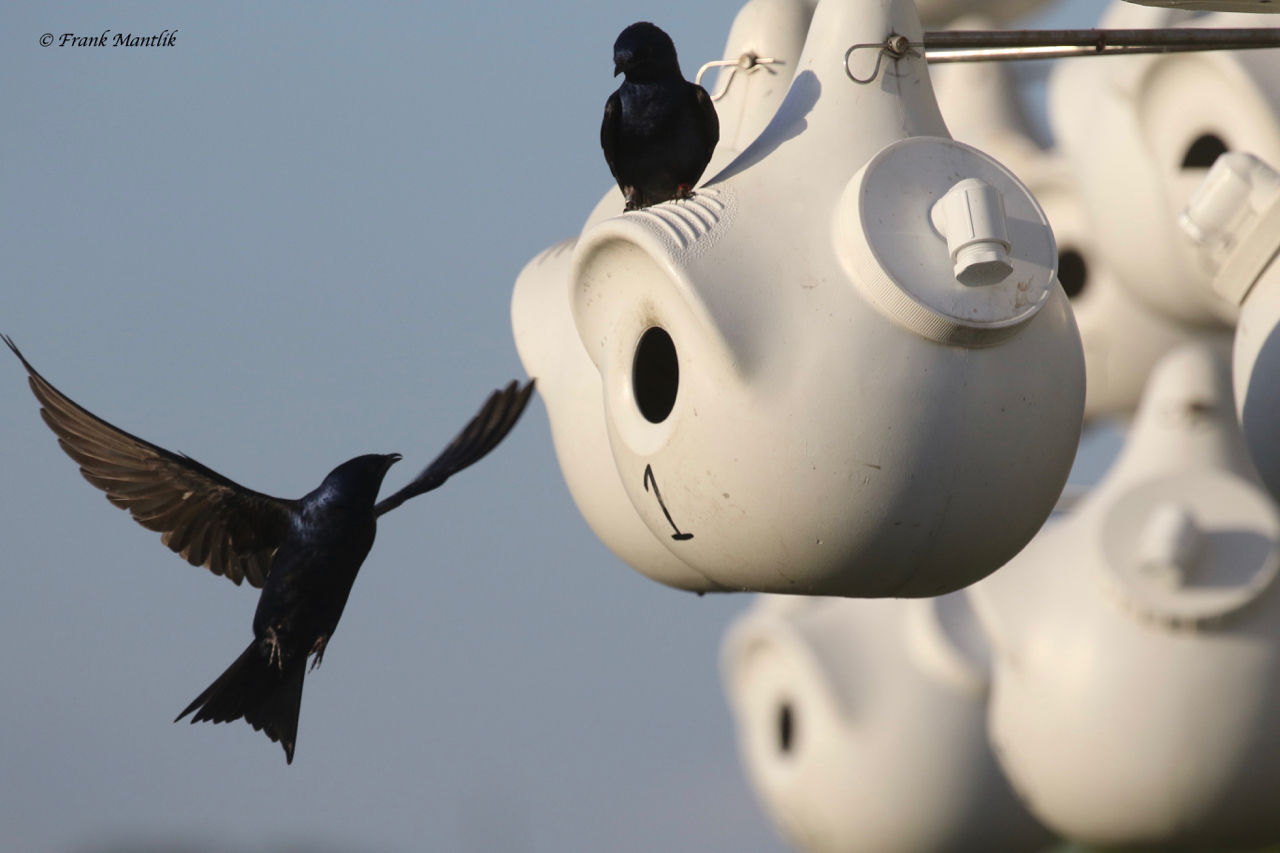
Purple Martins at the Coastal Center’s nest gourds. These are males — note the near-black purple color. Photo by Frank Mantlik.
Purple Martin
Progne subis
Look for Purple Martins in and around any of several dozen colonies of man-made houses or gourds throughout Connecticut.
In the eastern U.S., these large swallows are completely dependent on them (though out west, they nest in natural cavities too).
All the successful colonies in Connecticut are near water. The birds soar and glide over lakes, tidal marshes, and grassy and shrubby fields, searching for flying insects, especially dragonflies, often at such heights that they’re impossible to see with the naked eye.
There’s are colonies at the Coastal Center at Milford Point and Deer Pond Farm. Connecticut Audubon staff and volunteers check the nests weekly throughout the breeding season.
All told, there might be as many as three dozen colonies in the state, including smaller and newer colonies at the Center at Pomfret and Stratford Point, and well-established colonies at Sherwood Island and Hammonasset State Parks, and at the Quinebaug Valley Fish Hatchery in Plainfield. Kent seems to be a particularly good area for them.
If you visit a colony, you won’t have much trouble identifying the birds, unless they happen to be off hawking insects. Adult males are a dark iridescent blue-purple but often look black. Females and juveniles are duller with shades of gray on the head and chest, and some white on the lower belly. The wings are long and tapered, the tail mildly forked.
Males usually arrive by mid-April to scout out territories and most birds have left Connecticut by late August. Purple Martins spend the winter in northern to central South America.
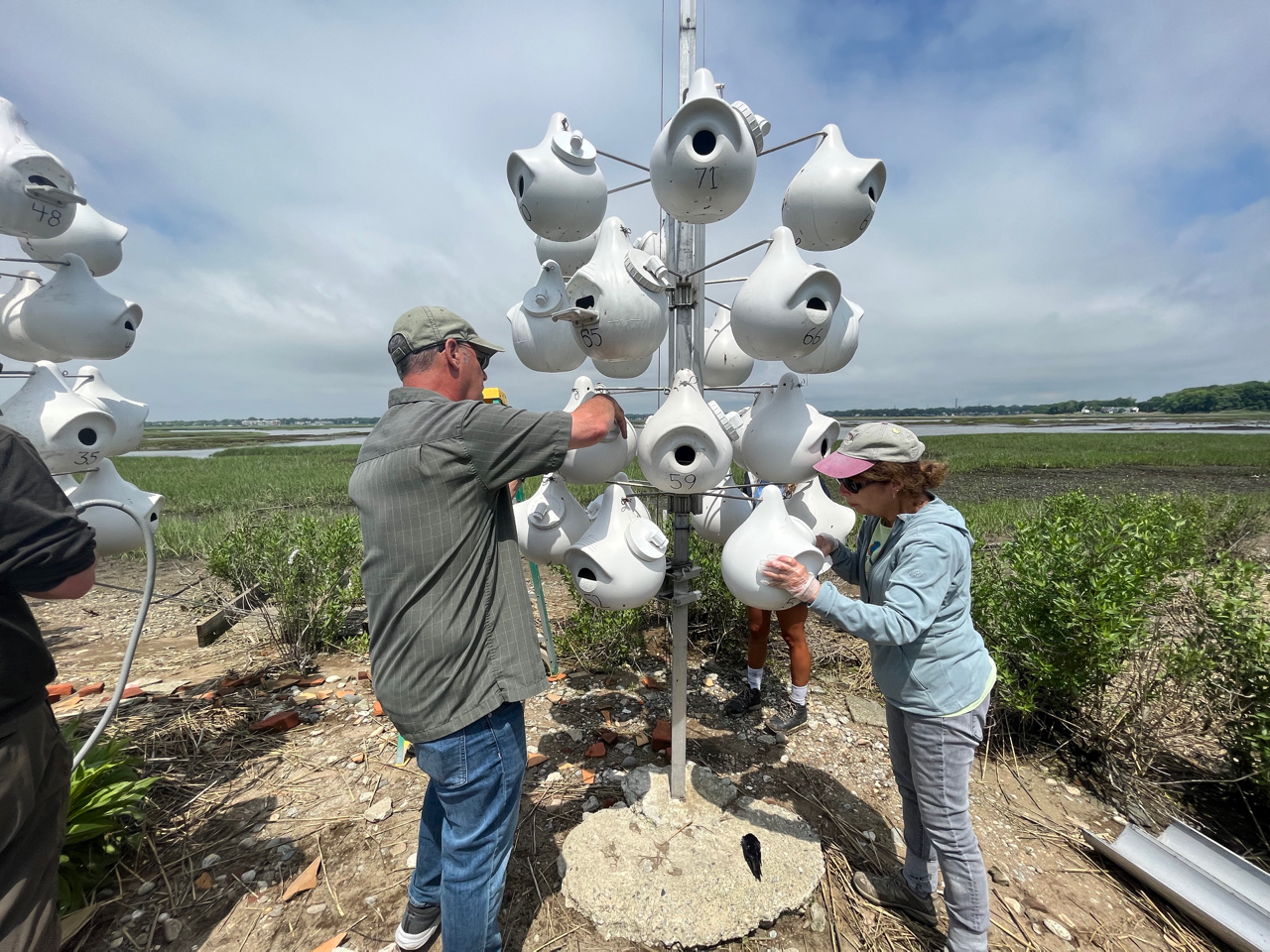
George Amato and Bev Propen, two volunteer members of the Purple Martin monitoring crew at the Coastal Center, check the gourds. Photo by Frank Mantlik.
In 2015, the official status of Purple Martins in Connecticut was improved, to special concern, from threatened. The Purple Martin Conservation Association uses Connecticut a model for other states to follow to turn around declines in their Purple Martin populations.
On the national level, the IUCN indicates the Purple Martin is of Least Concern. Least Concern however does not mean no concern. Purple Martins are of “least concern” compared to other species that are in more dire condition. From 1966 to 2015, the North American Breeding Bird Surveys found a drop in the Purple Martin population of 37 percent.
Purple Martin colonies are under threat from introduced species such as European Starlings and House Sparrows, which take over martin houses and gourds, and damage eggs or kill nestlings. Cold snaps longer than three to four days also kill martins because of their effect on the insects the birds rely on for food.
Predators such as raccoons can raid colonies as well, and this month volunteers at the Coastal Center installed baffles in hopes of keeping raccoons away from the nests there.