Western Sandpiper
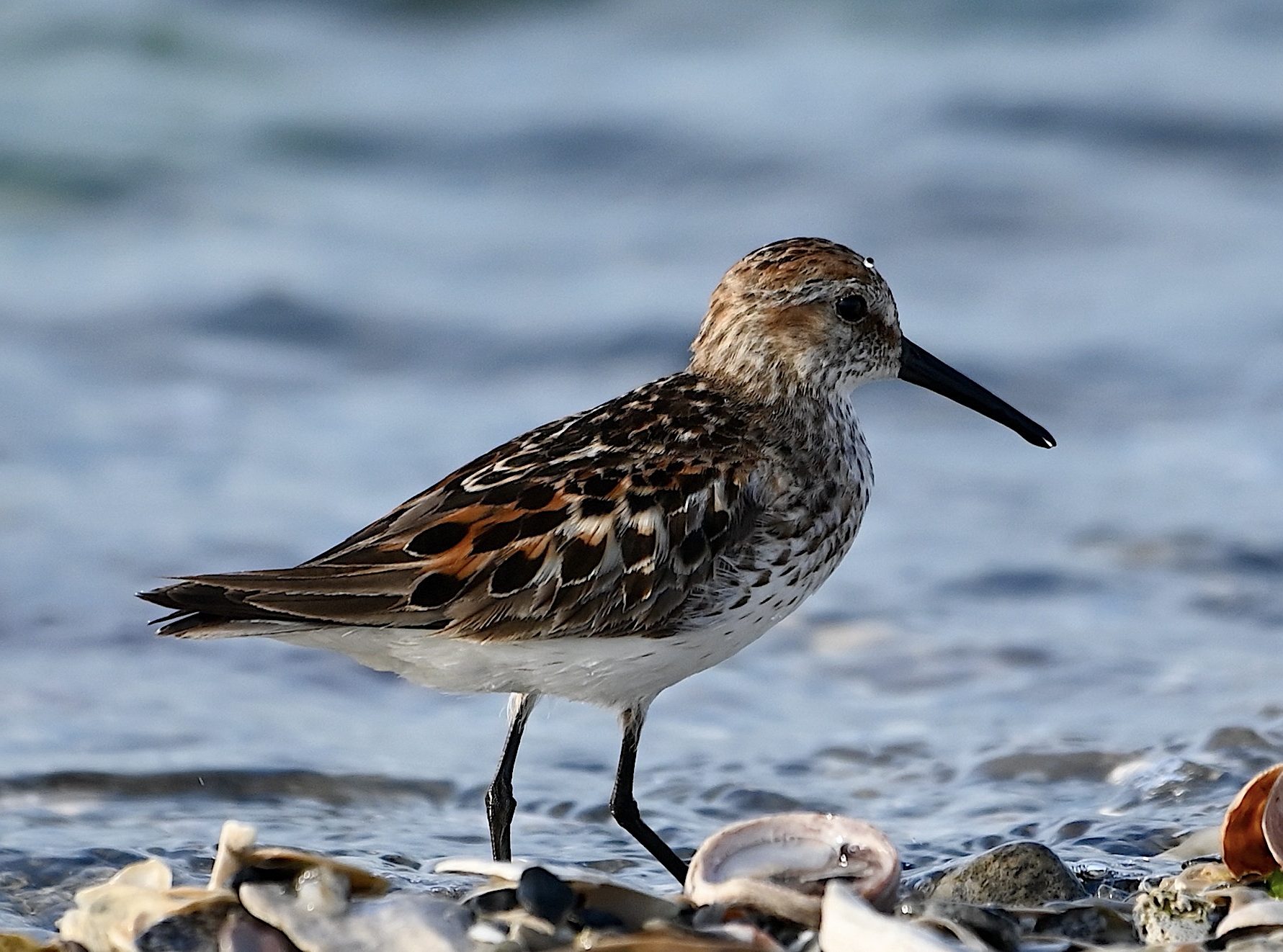
Western Sandpiper at the Coastal Center, June 2020. Photo by Gilles Carter.
Western Sandpiper
Calidris mauri
by Andrew Griswold, director of Connecticut Audubon Society’s EcoTravel office.
Videos of Western Sandpiper with Semipalmated Sandpiper at the Coastal Center, taken by Gilles Carter on June 15, 2020. Note the longer, drooped bill on the Western Sandpiper.
Western Sandpiper is considered a vagrant in Connecticut, with about half a dozen sightings each year.
Most sightings are later in summer, during southward migration, and have occurred at several locations. The only June sightings in Connecticut recorded on eBird have been at the Milford Point Coastal Center.
A member of the group of sandpipers referred to as “peeps,” Western Sandpiper is a relatively small sandpiper with a short neck. It usually has a longer bill than its cousin the Semipalmated Sandpiper, with a slight droop, and a slightly longer-legged appearance. The black center of the rump and tail helps to separate it from White-rumped Sandpiper. Legs are black, unlike Least Sandpiper’s short, yellow-green legs. Its gray-brown back with some reddish helps in separating it from the grayer Semipalmated.
Juvenile birds are similar to adults, but with a more scaly pattern on their backs. Many, if not most, of the individuals we see here in Connecticut are young birds. Key in on this scaly appearance and longer, slightly drooping beak.
Look for Western Sandpiper later in summer too. In addition to the Coastal Center, check Sandy Point in West Haven, particularly among the Semipalmated Sandpipers. Any place where shorebirds congregate, this species is a possibility. Search at Hammonasset Beach State Park and other coastal flats. This bird does make appearances at inland sites where lakes and reservoirs have exposed mud flats.
Conservation status: The Western Sandpiper is by no means uncommon as it stages in huge, impressive flocks, primarily along the Pacific coast from San Francisco Bay to the Copper River Delta in Alaska. As many as 6,500,000 individuals use the Copper River Delta during the short spring migration. The bird’s breading range is relatively restricted, found nesting in coastal sedge-dwarf tundra along the Alaskan coast.