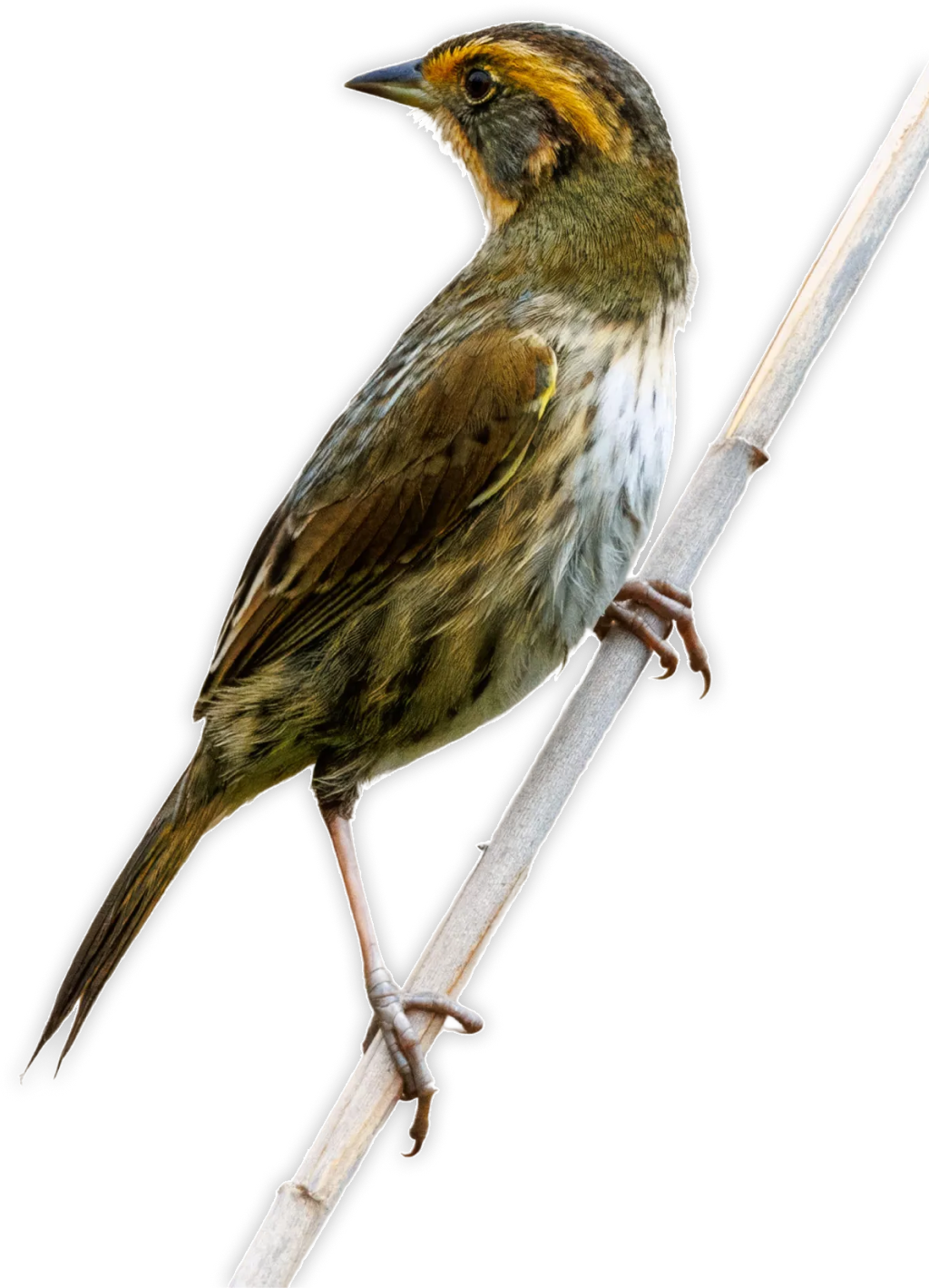
Golden Alexanders — An All-You-Can-Eat Buffet for Songbirds
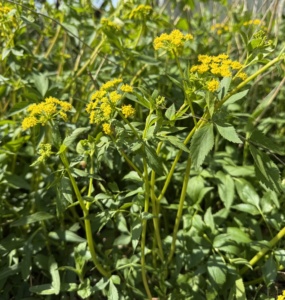
Golden alexanders bloom in May and June.
As violets fade toward the end of April, the lacy, bright yellow flower clusters of golden alexanders (Zizia aurea) appear, delighting humans and insects all at once.
These floral starbursts, called umbels, are about 3 to 4 inches wide. They resemble those of dill and Queen Anne’s lace, which are both members of the carrot family.
Golden alexanders are a larval host plant for the Black Swallowtail butterfly and, in the Ozark Mountains, the rare Ozark Swallowtail. Regular readers will remember that a host plant with insect larvae provides an all-you-can-eat buffet for songbirds feeding their nestlings. Golden alexanders may also attract the native lady beetle, a valuable predator of garden pests.
Each tiny flower has five sepals, five petals, and five stamens. The flowers are an important nectar and pollen resource for many short-tongued bees, wasps, flies, beetles, and Spring Azure butterflies. The flowers are also capable of self-pollination. The bright-green leaves are serrated and may be divided into two, three, or more leaflets. They turn purple in autumn.
Later in the season, songbirds will eat the fruit, which forms in attractive, oblong pods that turn purple in the fall. Deer, however, do not favor golden alexanders.
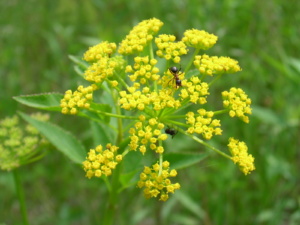
Tiny insects are attracted to the golden alexander’s flower clusters.
The native range of golden alexanders extends from eastern Canada to the southeastern United States. The golden alexander is a close relative of the heart-leaved alexander (Zizia aptera), which is also native to Connecticut but considered rare in the state.
In its native habitat, small colonies are often found in moist woods, meadows, glades, and thickets. The plant tolerates a wide range of soils — including clayey, sandy, and rocky — but requires good drainage.
Golden alexanders thrive in full sun or part shade. They prefer a moist site but tolerate average moisture. Although short-lived, they self-seed readily.
This plant is appropriate for pollinator and rain gardens, open woodland areas, and the ground layer of native hedgerows or groves. Its foliage can sometimes become ragged later in the summer, so consider planting later-blooming plants such as turtlehead, blue mistflower, or garden phlox nearby to help mask it.
Blooming from May through June, this easy-care plant typically grows about 18 inches tall but can reach up to 3 feet, with a spread of 1 to 2 feet. It blooms for a long time and makes a good cut flower.
Golden alexanders have been used medicinally by the Meskwaki, a Native American tribe.
I have golden alexanders planted at the base of elderberries in a moist area of the property. They receive full sun until afternoon, then dappled shade. They are spreading happily but not aggressively. Given that they help support so many insects and birds, I am happy to have them spread.
If you collect the seeds, plant them in the fall so they receive the cold stratification needed to germinate.
Homegrown Habitat is Connecticut Audubon’s monthly feature designed to help you make your yard better for birds and butterflies. The articles are written by Sarah Middeleer, a landscape designer whose work focuses on ecology and designing for wildlife. She is also a member of Connecticut Audubon’s Board of Directors.
Do you have favorite native plants in your garden or questions about native plant gardening? Email homegrown@ctaudubon.org with questions or observations.
Resources
Books:
Anna Failkoff and Heather McCargo, Native Ground Covers for Northeast Landscapes, Wild Seed Project, 2022
Websites: