Snowy Owl
Bubo scandiaca
by Andy Griswold, Director of Connecticut Audubon’s EcoTravel Program
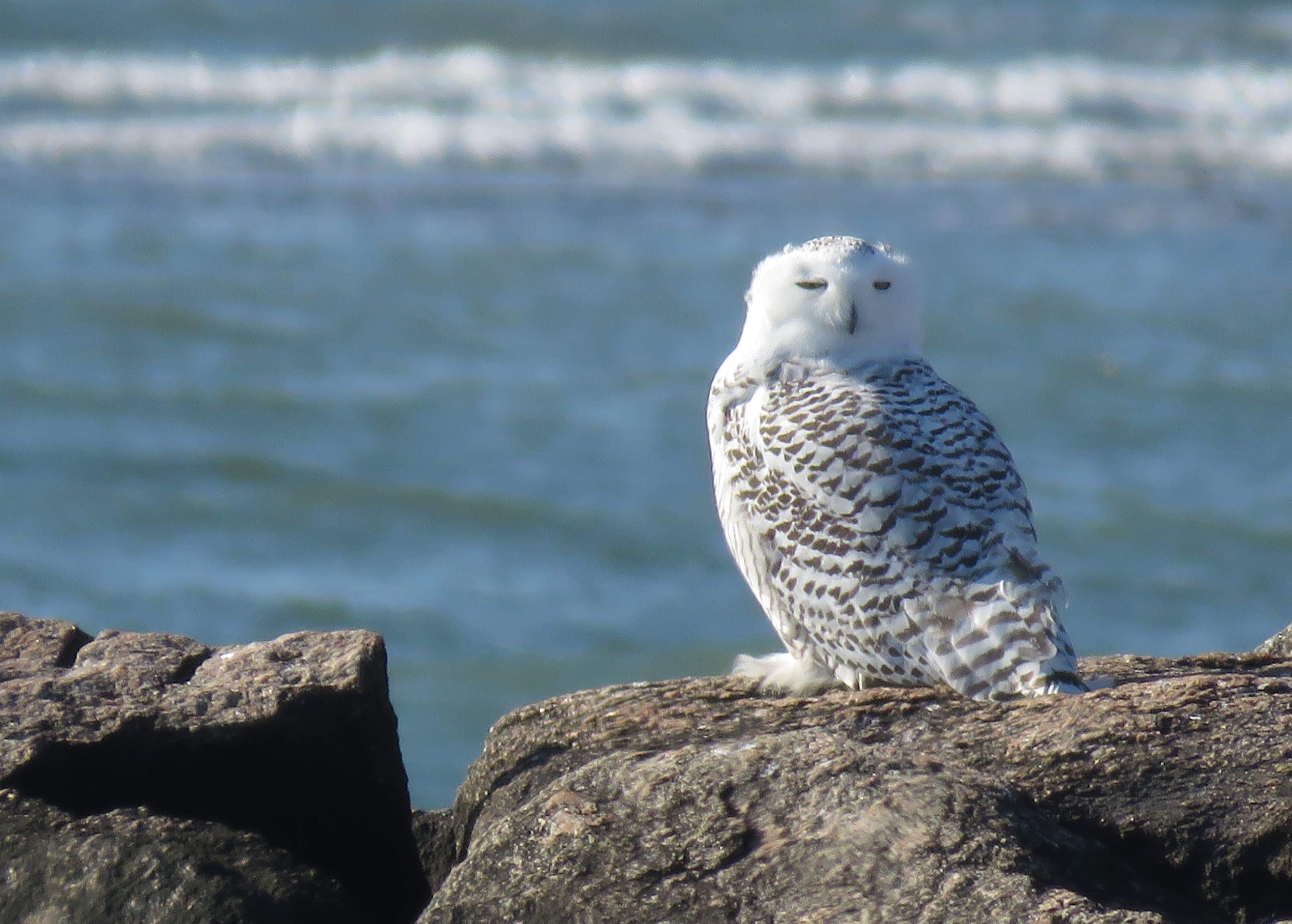
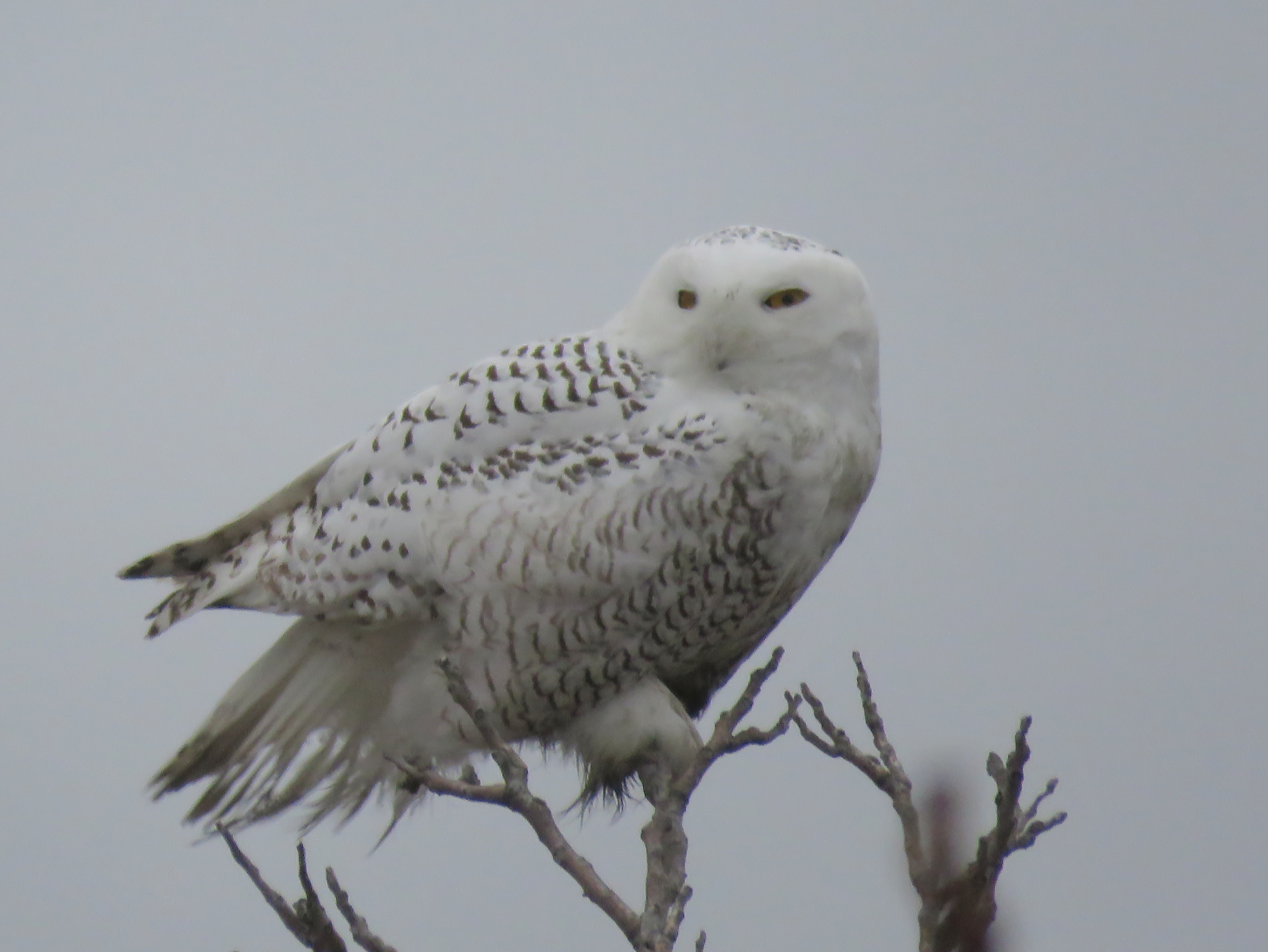
What it looks like: A large northern owl, the Snowy Owl is our heaviest owl. It is an unmistakable white raptor that perches prominently in open areas, often near marshes, dunes, and meadows. Although mostly white, they vary in the amount of dark barring on their feathers, the young birds being more heavily barred than adults, and females more than males. In flight, their heavy build, round head, and broad white wings are distinctive. These owls are active during the daytime, often moving from perch to perch and observed hunting.
It’s worth emphasizing that there are three basic rules that Snowy Owl observers are expected to follow (borrowed from Project SNOWStorm):
- Keep your distance
- Respect private property
- Don’t feed an owl, ever
Another good way to find a Snowy Owl is to look for a gaggle of warmly-dressed men and women with scopes and cameras on tripods: birders who are observing the bird.
How to find it: Snowy Owls are relatively easy to find in an irruption year. Focusing on coastal areas is your best bet. Scan all open areas for a prominent white bump in an exposed area. Sometimes they may be found roosting on a rooftop of a beach cottage, but almost never in a tree. You will do best with a spotting scope.
What if it isn’t there: Generally there will be lots of winter birds moving down along the shoreline, so you will be rewarded with a variety of duck species including Red-breasted Merganser, Bufflehead, and Common Goldeneye, Red-throated and Common Loon, and many other waterbirds frequenting the same general location as the owl.
Conservation status: The IUCN lists the Snowy Owl as vulnerable. One estimate has their global population dropping from 200,000 birds to maybe only 14,000. The suspected cause of course is climate change.
Photos by Patrick M. Comins