Summersweet — The Fragrant Shrub That Pollinators Love
July can be tough on the garden, not to mention the gardener. Heat and humidity spike, weeds take off like Olympic sprinters, and many shrubs and trees, having finished flowering, are putting their energy into producing seeds and fruit. The garden may look less colorful and feel less inviting than in spring.
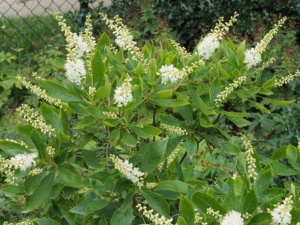
Meet summersweet (Clethra alnifolia), also known as sweet pepperbush. This deciduous shrub comes into its glory at this time of year, when spires of white, perfumed flowers appear on new growth, luring clouds of pollinators.
Summersweet is native to open woods and wetlands along the Atlantic seaboard and as far west as Texas. It typically grows 3 to 8 feet tall and 4 to 6 feet wide, forming a dense, rounded shrub. Its emerald-green leaves emerge later in spring than those of many other plants, a trait common to wetland shrubs.
In July and August, the bottlebrush-like white flower clusters, known as racemes, entice bees, hummingbirds, butterflies, and nectar-seeking moths. These flowers fill the air with a scent reminiscent of honey and a hint of spice that lingers into the evening.
Summersweet was once known as “sailors’ delight,” according to Native Plant Trust, a plant conservation organization. Before they could rely on lighthouses, sailors are said to have smelled the fragrance of summersweet’s flowers before they could see land.
By fall, the flowers develop into round, brown seed capsules that resemble peppercorns. The capsules remain most of the winter unless eaten by wildlife. The foliage turns a rich golden yellow in fall.
Summersweet also supports wildlife in another important way. It serves as a host plant for at least 10 species of moths and butterflies, providing food for their larvae. Those caterpillars, in turn, feed songbird nestlings.
In the wild, summersweet colonizes streambanks, wetlands, and pond edges. In the garden, however, it doesn’t tend to sucker as freely. It adapts to a range of soils, from wet to moderately dry. Summersweet is also tolerant of shade, salt, and periodic flooding. In shade or lean soils, it will stay smaller. Any unwanted spreading can be managed by pruning in late winter or early spring. If cut to the ground in winter, summersweet will regrow vigorously and will bloom at 3 to 4 feet high.
Summersweet, which is relatively deer resistant, is suitable for many garden locations, provided the soil does not become excessively dry. Because of its salt tolerance, it is a good choice for a seaside garden. Other good settings include rain gardens, hedgerows, mixed borders, moist areas, and the woodland edge.
Plant summersweet where you can enjoy its scent, say near a walkway, patio, or window. It is even said to do well in containers.
Summersweet is lovely in combination with other native shrubs, such as blueberries, spicebush, maple-leaf viburnum, and winterberry. Good herbaceous companions include purple coneflower, beebalms, blazing star, blue mist flower, cardinal flower, and great blue lobelia. Together, these plants brighten the garden palette in summer and provide needed resources to wildlife.
Each month, Homegrown Habitat features a native plant that supports birds and beneficial insects and is suitable for residential gardens. This column is written by Sarah W. Middeleer, a landscape designer and member of the Connecticut Audubon Society’s Board of Directors.
Do you have favorite native plants in your garden or questions about native plant gardening? Email homegrown@ctaudubon.org with questions or observations.
Resources
Books:
William Cullina, Native Trees, Shrubs, and Vines A Guide to Using, Growing, and Propagating North American Woody Plants, Houghton Mifflin Company, 2002
Anna Fialkoff et al., Native Shrubs for Northeast Landscapes, Wild Seed Project, 2023
Uli Lorimer, The Northeast Native Plant Primer 235 Plants for an Earth-Friendly Garden, Timber Press, 2022
Mark Richardson and Dan Jaffe, Native Plants for New England Gardens, New England Wildflower Society, 2018
Websites:
Missouri Botanical Garden Plant Finder
Native Plant Trust Plant Finder