Colombia: Central Andes and Santa Marta
In recent years, Colombia has quickly risen through the ranks as one of the most highly sought-after birding destinations. With over 1,900 species of birds, it’s the most diverse country on the planet! From the towering Andes to legendary Santa Marta, this new adventure is a great introduction to South American birding. Among the Andes, we’ll visit multiple elevations, including feeding stations for normally shy antpittas, and have the chance of spotting nearly 60 different species of hummingbirds. A visit to Santa Marta, a small mountain range on the Caribbean coast, will bring with it a host of new species. This isolated range is home to over 20 species found nowhere else in the world, including some that are still being discovered!
Registration Forms & Deposit
A $1,500 deposit, per person, applicable to final payment, is required to reserve space on this trip. Complete and return the registration forms with your deposit payment to begin your next adventure today! Early reservations with deposit are essential to guarantee your booking.
Itinerary
Day 1
We’ll depart our home airports in the early morning, aiming to arrive in Pereira in the mid-afternoon. After transferring to our hotel, we’ll have time to relax before a Welcome Dinner and introductions where we’ll discuss the plans for the days ahead.
Night: Hotel Mandalay
Meals: D
Day 2
14 miles from the city of Pereira lies Otún Quimbaya Sanctuary, nestled amidst the picturesque western flank of the Central Mountain Range. The sanctuary encompasses an impressive 90% of protected natural forests in different states of succession and mature forests. A top spot for birdwatching, the sanctuary contains species accounting for 16% of all birds reported in Colombia. In the early morning, and no doubt with the distraction of the sound of the Howler Monkeys, we’ll take a walk along an open, quiet road to connect with several sought-after birds. The sanctuary is considered one of, if not the, best place to find Cauca Guan (E). Other endemics found on the property include the iconic Multicolored Tanager (E) and the unique Crested Ant-Tanager (E). We’ll also keep our eyes out for species including Red-ruffed Fruitcrow, Andean Motmot, Northern Chestnut-breasted Wren, Golden-headed Quetzal, Wattled Guan, Black-billed Peppershrike, and Rufous-naped Greenlet. Otún Quimbaya is also well known for being the best site to see the mysterious Mountain Tapir.
After lunch, we’ll head towards the charming city of Manizales. Along the way, we’ll make strategic stops to admire the beauty of a nearby cascading river, where we might be fortunate enough to spot remarkable species such as Torrent Duck and White-capped Dipper, among others.
Night: Hacienda El Bosque
Meals: BLD
Day 3
Río Blanco is one of the best birding sites in Colombia, particularly for skulking species. As the first birding location in Colombia to develop feeders for antpittas, it’s a must-visit destination for those eager to observe these elusive birds up close. Located just to the northeast of Manizales, the reserve spans elevations from 7,050 to 12,140 feet a.s.l. and consists of highly biodiverse cloud forest, home to numerous endangered species. With 362 species, including 13 Colombian endemics, this area offers an incredible birding experience.
We’ll begin the day with the local warden guiding us to a feeding area, where we can enjoy close views of the once almost impossible Brown-banded Antpitta (E). Chestnut-crowned Antpitta is often more cooperative as the day unfolds, and we also have good chances of spotting Bicolored and Slate-crowned antpittas. Other species we’ll search for include Green-and-black Fruiteater, Ash-colored Tapaculo, Ocellated Tapaculo, and Gray-browed Brushfinch. Further searching should reveal Black-collared Jay, Bar-bellied and Crimson-mantled woodpeckers, and Lacrimose Mountain Tanager. Additionally, several species of hummingbirds can be observed throughout the reserve, including the Tourmaline Sunangel, Long-tailed Sylph, and Buff-tailed Coronet.
Night: Hacienda El Bosque
Meals: BLD
Day 4
The elfin forest and paramos of this massive park are home to endemic species, including the rare and local Rufous-fronted Parakeet (E). Starting in the elfin forests, we’ll search for the parakeet, along with Rainbow-bearded Thornbill, Viridian Metaltail, Golden-breasted and Black-thighed pufflegs, and Paramo Tapaculo, while small roving flocks may include Golden-fronted Redstart, Paramo Seedeater, White-browed Spinetail, and White-chinned Thistletail. One of the highlights of this stunted mountainside is the delightful endemic Buffy Helmetcrest (E), and we’ll look for this amazing bird in flowering bushes. Also, here should be the vocal and often showy Tawny Antpitta, alongside Stout-billed Cinclodes, Crowned Chat-Tyrant, and Many-striped Canastero.
Night: Hacienda El Bosque
Meals: BLD
Day 5
Hacienda El Bosque is a traditional Andean estate located just 30 minutes from Manizales, offering an incredible mix of bird diversity and breathtaking landscapes. Situated between 9,514 and 12,790 feet a.s.l., the hacienda encompasses vast high-Andean forests, páramo ecosystems, and pastures for livestock and dairy production. With over 40 years of forest conservation, this site has become a prime destination for observing high-altitude specialties.
One of the main highlights of Hacienda El Bosque is its feeder stations, which attract an outstanding variety of hummingbirds and tanagers. Here, we’ll target species including Collared Inca, White-bellied Woodstar, Mountain Velvetbreast, Sparkling and Lesser violetears, Tyrian Metaltail, and Buff-winged Starfrontlet. Additionally, the highly sought-after Gray-breasted Mountain-Toucan often makes an appearance. However, the true stars of Hacienda El Bosque are its antpitta feeders, which offer the rare opportunity to observe two of the most elusive species in the region: Crescent-faced and Equatorial antpittas.
Night: Tinamú
Meals: BLD
Day 6
Tinamú Reserve is a charming birding hotspot with well-maintained trails and numerous feeders just 30 minutes from Manizales. Nestled in a 12.5 hectare dry forest at 4,020 feet a.s.l., this reserve provides excellent opportunities to observe a diverse range of bird species. We’ll search for several Colombian endemics, including the Grayish Piculet (E), Colombian Chachalaca (E), and Parker’s Antbird (E). Other specialties include Moustached Puffbird, Blue-lored Antbird, Speckle-breasted Wren, and Guira Tanager. Additionally, the reserve offers a high chance of witnessing a lek of the Golden-collared Manakin, where males perform their fascinating courtship display. At the feeders, we can expect to see near-endemics like the Western Emerald and Scrub Tanager, alongside a variety of other hummingbirds and tanagers, including Blue-necked Tanager and Andean Emerald.
Since we’ll be surrounded by coffee plantations throughout most of our journey, and Colombian coffee is often regarded as some of the highest quality on the planet, we cannot miss the opportunity to be immersed in a coffee experience at Venecia farm. With a craft cup of coffee in hand, we’ll receive a general introduction to the world of coffee in a cozy coffee lounge. We’ll learn about the origin and history of coffee, the worldwide distribution, and the different coffee varieties and qualities, as well as about the aromas and properties of coffee and the Coffee Cultural Landscape (UNESCO World Heritage Site). The tour continues with a walk through the plantation to learn more about the growing and harvesting of coffee beans. After picking our own beans, we’ll visit the wet mill to learn about coffee processing and marketing. We’ll have the chance to taste and see the beans with different grades of roasting to experience the different aromas, as the roasting brings out the aroma and flavor that is locked inside the green coffee beans.
Night: Tinamú
Meals: BLD
Day 7
In the early morning, we’ll pack our bags and head to the airport in Pereira for an in-country flight to Barranquilla. After arriving, we’ll spend the first hours in the Malecón of Barranquilla, where our main target will be Northern Screamer, a unique species that eats aquatic plants. We’re sure to see a few common species as well.
Night: Hotel Sheraton
Meals: BLD
Day 8
We’ll visit the extensive wetlands and Mangroves of Salamanca National Park, to the east of Baranquilla. The national park is adjacent to the Ciénaga Grande, right in the middle of the Barranquilla-Santa Marta highway. It protects the most significant area of mangroves in the Colombian Caribbean and offers good chances for the endemic and endangered Sapphire-bellied Hummingbird (E), while also being home to interesting species, including Bicolored Conebill, Black-crested Antshrike, Dwarf Cuckoo, Yellow-chinned Spinetail, and Striped-backed Wren. In the late morning, we’ll start driving east through the park with the expectation of making frequent stops to observe the concentrations of waders and terns that can often be found in roadside pools. In the late afternoon, we’ll climb into the foothills of the Santa Marta Mountains.
Night: Mountain House
Meals: BLD
Day 9
Minca is a little village located in the foothills of the Sierra Nevada. The birding from the dry scrub below the village up to the shade-coffee plantations area encompasses a variety of different habitats which yield large numbers of birds, including near-endemics such as Golden-winged Sparrow, Scaled Piculet, and Red-billed Emerald, along with Military Macaw, Pale-eyed Pygmy-Tyrant, Rufous-and-white Wren, and Black-headed Tanager. The restaurant feeders attract White-vented Plumeleteer, Rufous-breasted Hermit, Steely-vented Hummingbird, White-necked Jacobin, and Black-throated Mango.
Night: Mountain House
Meals: BLD
Day 10
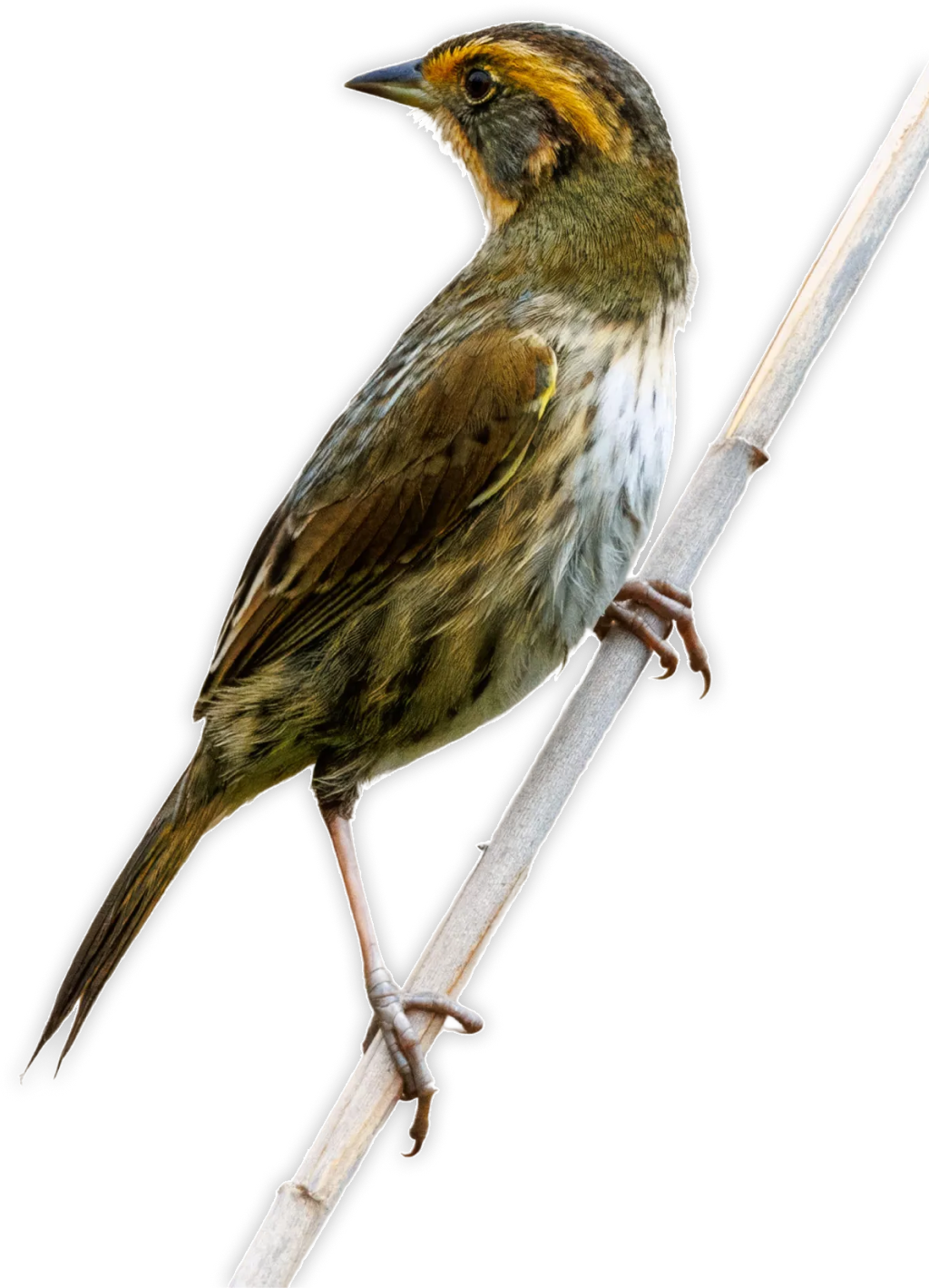
The Sierra Nevada de Santa Marta, a UNESCO Biosphere Reserve, is an isolated mountain set apart from the Andes. Reaching an altitude of 18,942 feet above sea level, the Sierra Nevada is the world’s highest coastal peak and holds the highest degree of endemism per unit area in the world. Currently, there are 24 Santa Marta endemic bird species, although taxonomic changes are expected to increase this number. This breathtaking region is home to a dazzling array of endemic bird species, including some that are critically endangered, including the Santa Marta Parakeet (E). We’ll look for the striking Yellow-crowned Redstart (E), the exquisite Santa Marta Warbler (E), the colorful Black-cheeked Mountain Tanager (E), and the elusive Santa Marta Bush-Tyrant (E).
We might even catch a glimpse of the Brown-rumped Tapaculo (E), the Rusty-headed Spinetail (E), and Santa Marta Antpitta (E), as well as the intriguing Sierra Nevada Antpitta (E), which was recently split. In the afternoon we’ll watch out for the stunning White-tailed Starfrontlet (E), lively Streak-capped Spinetail, and Santa Marta Brushfinch (E) and numerous endemic subspecies.
Night: Mountain House
Meals: BLD
Day 11
With a wonderful view of the mountains and the Caribbean Sea in the subtropical area of the Sierra Nevada de Santa Marta, we’ll spend the morning birdwatching at Mountain House Lodge. Our goal for the day is to locate the elusive Santa Marta Blossomcrown (E), a beautiful bird that can only be found in a few particular garden setups. In the afternoon, we’ll search for all the endemic species and subspecies that inhabit this elevation, including any specialties we may have missed. As the day draws to a close, we’ll try to squeeze in a little more birding before dusk.
Night: Mountain House
Meals: BLD
Day 12
We’ll depart after breakfast for the drive back to Barranquilla, stopping for lunch on the way, in order to make our evening flights back home. With plenty of memories to talk about, the drive and flight should go by quickly!
Meals: BL
Tour Leader

Matt Bell
EcoTravel Frequently Asked Questions
Why travel with EcoTravel?
We’re proud to offer small group travel in support of conservation, both locally and across the globe! By traveling with EcoTravel, you’re supporting environmental education and habitat management everywhere we go. When traveling internationally, we strive to use local companies who know the best places to visit, providing an intimate experience with the culture and wildlife.
What's included in the cost of the trip?
Most everything. Most every travel expense is included in one up-front price – airport transfers as specified in the itinerary, all hotel accommodations, birding/sightseeing with experienced guides, meals as specified in the itinerary, airport transfers, services of local guides, and more.
Most meals are included on EcoTravel journeys. All breakfasts are included, and some dinners. Occasional lunches in special locations may also be included. Although some dinners may not be included, suggestions for dining options will be offered by your tour leader. Many EcoTravel guests choose to dine together to share in new friendships and discoveries, but the choice is yours. Dining is a delightful and integral part of the EcoTravel experience – and that is why we select restaurants that offer a true taste of each region you visit. Most included meals offer limited choice menus, and some may be from a set menu or buffet. All appropriate gratuities for included meals are included.
For exact information of what’s included on a specific trip, please check the trip page.
What's not included in the cost of the trip?
Alcoholic beverages are not included, nor are meal gratuities for not-included meals, local guides, luggage handling, bellmen, doormen, and dining room servers. EcoTravel guides and driver gratuities are not included and should be offered individually, not as a group. Transfer driver gratuities are included.
Luggage service on EcoTravel tours is not included.
For exact information of what’s not included on a specific trip, please check the trip page.
What's your cancellation policy?
All trips are non-refundable.
Day Trips run as scheduled, and all participants are expected to be there. In the event weather postpones the trip and you can’t make the new date, or we don’t receive enough signups to run the trip, you’ll receive a non-expiring credit for the full value paid.
Overnight Trips can be partially refunded outside of 120 days before departure. Payment is due in full 120 days before departure, and no refunds are given. Exact details for each trip can be found in the terms and conditions on the Printable Itinerary.
What's the average group size?
Almost all of our trips are kept to single digits! We believe that small groups give a better experience to everyone. Day Trips and certain overnights may include up to 14 participants, with two guides.
Many of our trips run with just 4-6 participants!
What level of birder do I need to be?
All levels are welcome! While some trips are more intense than others, our guides are skilled at helping everyone see as many birds as possible while having a great time.
Do you sell travel insurance?
EcoTravel is an authorized agent of Travelex travel insurance. Please call the office for more information.
What happens if the tour doesn't fill?
Day Trips: Cancellation results in a credit for the full value that can be used for future trips.
Overnight Trips: Travelers are given the chance to rebook the same trip for a future year, or to move their money at full value to another trip.
What's the activity level of the tours?
It varies! Some tours have lots of walking, while others are more sedentary. For exact information on the activity level of a specific trip, please call the office.
How far in advance can I / should I book?
We encourage you to make your reservation just as early as possible – especially if you are limited to the time period in which you can travel. EcoTravel journeys are popular and tend to fill quickly.
Can EcoTravel help make arrangements for pre-tour and post-tour hotel nights?
Absolutely! Many guests choose to extend their stay and we’re happy to help. As a service, EcoTravel will make hotel reservations before and/or after your journey at select pre-/post-stay hotels offered for that tour. Rooms are reserved at the first or last night’s hotel property of any EcoTravel journey, so there’s no worry of having to change hotels or rooms at the start or end of your trip. Rooms are reserved on a space-available basis, and the cost will be added to your tour cost.
Arranging hotel accommodations in the city where your journey begins for the night preceding your EcoTravel itinerary not only gives you more time to explore on your own, allows your group to become better acclimated to time changes before your journey begins and helps to relieve stress from potential travel delays – important factors to consider! Guests wishing to spend more time in cities where our journeys end can extend their stay – a great way to make your vacation last a little longer.
Are transfers included to and from my pre-tour and post-tour hotels?
Complimentary transfers are included from the airport to your pre-stay hotel for the start of your journey and from your post-stay hotel to your departure airport.
Please Note:Transfers are included for EcoTravel-approved pre- and post-stay hotels. Non-EcoTravel hotel transfers must be approved prior to leaving on your tour.
More Trips