Hidden in Plain Sight: The Photo That Won Migration Magic
“All you have to do is open your eyes and your ears.”
Michelle Babyak was sipping her morning coffee and scanning the skies for warblers on May 13 when an unexpected ally alerted her to an owl nearby.
From her front porch in Sandy Hook, Babyak heard the high-pitched alarm call of a squirrel, a sound she has learned often signals the presence of a hidden owl.
She grabbed her Nikon D850 and focused on a pine tree about 15 feet away.
Then she saw it — a perfectly camouflaged Barred Owl staring straight at her. Only its eyes gave it away.
“I would have never seen it,” said Babyak, 59. “The squirrel takes credit for that shot.”
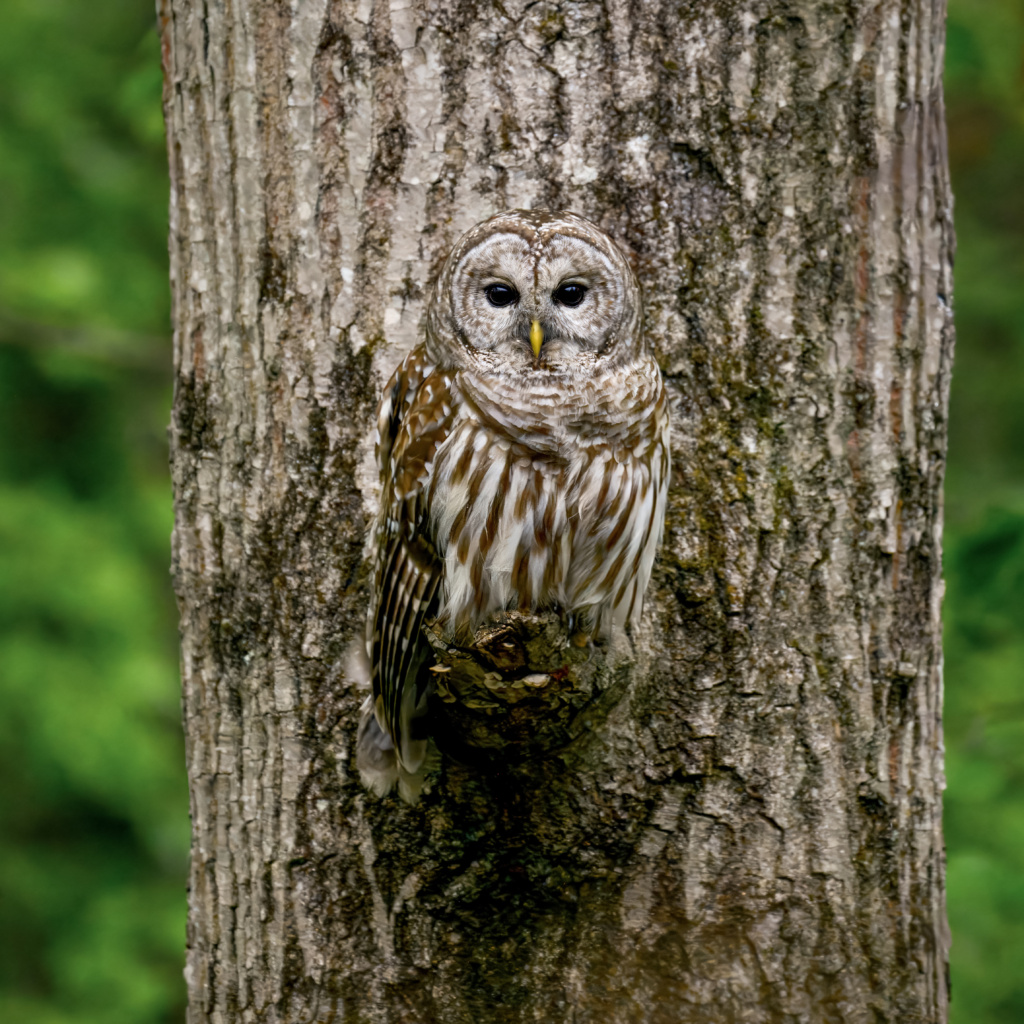
Seconds later, the owl was gone. But at 8:06 a.m., Babyak had already captured the image that would win the Connecticut Audubon Society’s 2026 Migration Magic Photo Contest.
Her photograph earned first place among 106 entries and gave Babyak her first contest victory after three years of participating.
“As soon as May 1 starts, I am focused,” she said. “I’ve been really trying to tune in and listen and watch and appreciate and learn the world around me through nature, through the birds.”
The effort paid off.
Matt Zucconi, this year’s contest judge, praised the image for both its technical quality and the difficulty of the sighting.
Spotting a Barred Owl during the day is “already a seriously difficult feat,” said Zucconi, a research assistant at the University of Rhode Island and avid birder.
With remarkable clarity, Babyak captured the owl facing directly toward the camera, preserving what Zucconi described as a “rewarding birding moment.”
Without knowing the identities of the photographers behind the submissions, Zucconi also selected a second image by Babyak for an honorable mention. The photograph, showing a Brown Thrasher in mid-flight at Hammonasset, was his runner-up choice.
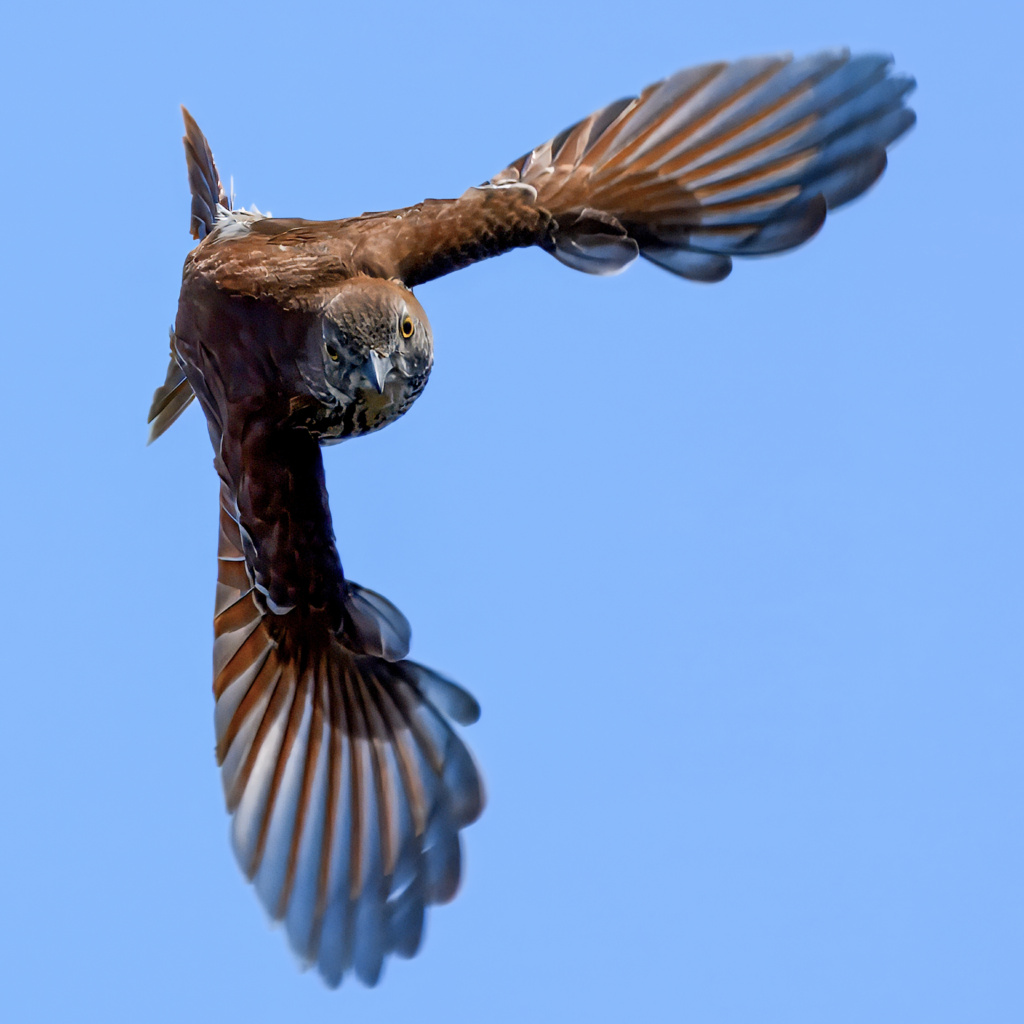
It was only the second Brown Thrasher Babyak had ever seen.
She was stunned by the recognition.
“This means a lot,” she said.
Birding has been a source of joy for Babyak since 2020. During the pandemic, her husband was in kidney failure and awaiting a kidney and pancreas transplant. To relieve stress, she often visited a nearby pond to watch a colony of herons.
Her husband ultimately received both transplants and recovered.
Then, in 2022, Babyak learned that her metastatic breast cancer had returned.
Once again, she turned to birds.
“I sat in my window, and I learned all the birds and their calls,” she said.
Still undergoing treatment, Babyak said birding has helped her stay present, find beauty in everyday moments, and embrace life.
“That’s what I’m doing, watching these birds,” she said. “All you have to do is open your eyes and your ears.”